200 years ago, a wounded stork in Germany changed how we understand bird migration
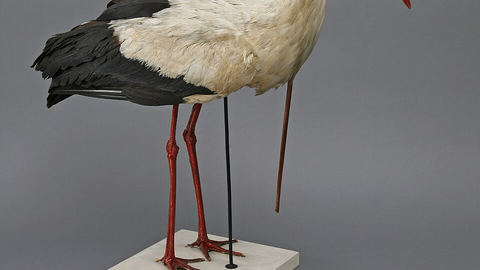
Two centuries ago, a white stork appeared in Germany with an African spear through its neck, delivering the first direct proof that birds migrate to Africa for winter. Before this discovery, scientists proposed bizarre theories, including that birds spent winters on the moon.
CultureIn 1822, a white stork was shot near the German town of Greifswald, but what made it extraordinary was not its death, but what it carried. Embedded in the bird's neck was an African wooden spear, nearly a metre long. The stork had flown all the way from sub-Saharan Africa with the weapon lodged in its body, surviving the entire journey. In a single moment, centuries of speculation about bird migration were overturned.
Theories before the stork
Before this discovery, European naturalists had proposed remarkably creative, and entirely wrong, explanations for where birds vanished each autumn. Some argued that swallows and other small birds sank to the bottom of lakes and rivers, entering a kind of underwater hibernation until spring. Others, including serious scholars, entertained the idea that birds flew to the Moon to spend the cold months. These were not fringe ideas; they were debated among educated people across Europe for generations.
The stork that arrived in Greifswald, now known in German as the "Pfeilstorch" or "arrow stork", provided something no argument or theory could: physical, undeniable evidence. The African spear was identified as originating from the region south of the Sahara, confirming that the bird had made an intercontinental journey. A single animal had accomplished what decades of scientific debate could not.
A landmark in natural science
The Pfeilstorch became one of the most important specimens in the history of ornithology. Its preserved remains were kept at the University of Greifswald, where they can still be seen today. The discovery launched the systematic study of bird migration and eventually led to the practice of ringing birds, attaching small numbered tags to track their movements, which transformed our understanding of animal behaviour worldwide.
Two hundred years later, the arrow stork remains a symbol of how a single unexpected observation can collapse long-held assumptions. In an era before satellites, GPS, or radio tracking, it was a wounded bird with a foreign weapon in its neck that finally told humans the truth about the ancient rhythm of migration.
Open in app →