40 years ago: Elmar Lepp opened the Soviet Union's first private bar in Pärnu
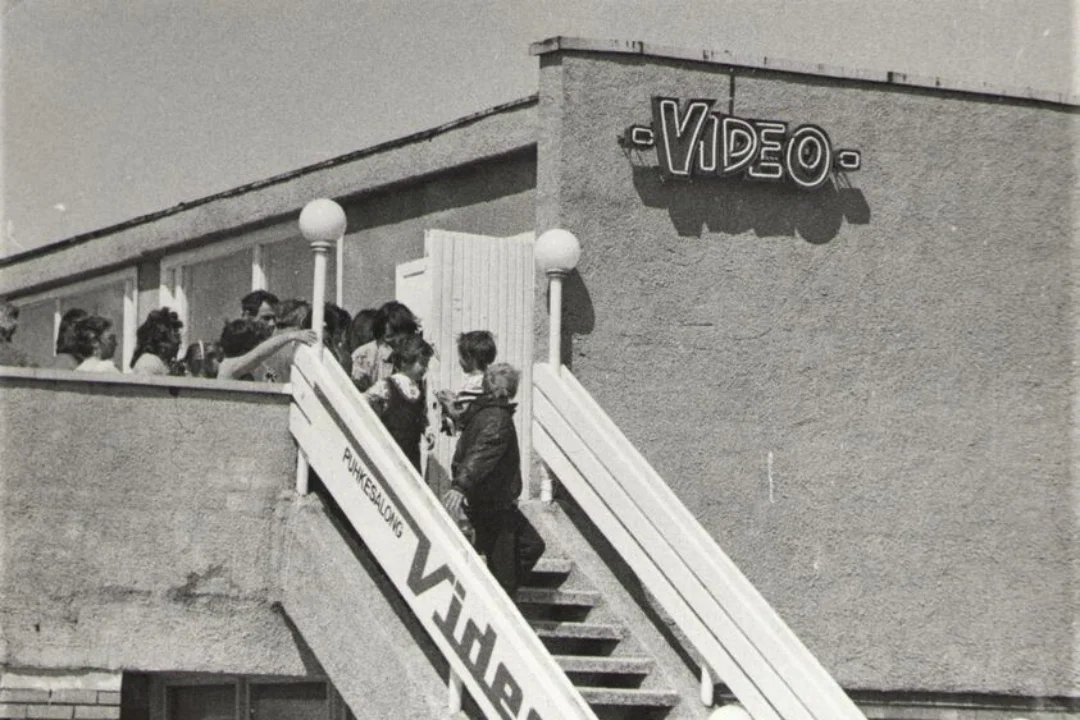
Exactly 40 years ago, on 21 June 1986, Elmar Lepp and Enn Kaljumägi opened Videobaar in Pärnu's beach complex, the first private enterprise in the Estonian Soviet Socialist Republic and the entire Soviet Union. This tiny video bar was the Soviet Union's first venture into private business, where children watched cartoons during the day and in the evenings drew crowds from afar with unprecedented Hollywood content.
EconomyExactly 40 years ago, on 21 June 1986, Videobaar opened its doors in Pärnu's beach complex-the first private enterprise in the Estonian Soviet Socialist Republic and the entire Soviet Union. Two enterprising men stood behind it: Elmar Lepp and Enn Kaljumägi.
The idea was born in Georgia
The inspiration for business came from a spring 1986 trip to Sukhumi. "The Georgians there boasted that they had private bars. In reality, of course, they belonged to the state. But we liked the idea of a private bar," recalls Lepp.
The men had capital-both earned extra money alongside their main jobs. Lepp brought foreign clothes and equipment from Finland and resold them. "I had a little home-Anttila," he laughs. The premises were rented from Pärnu's service and production administration in the beach complex, and permission to open was sought from the ministry of economy in Tallinn on Narva Road.
Legally, private enterprise was not permitted in the Soviet Union at that time, but legal loopholes made it possible to get signatures. "Business was forbidden and you couldn't employ labour," explains Lepp. "That's why the service was on our shoulders and our wives' shoulders-our mothers-in-law came to clean." Lepp also dismisses speculation about KGB cooperation: "We had nothing to do with the KGB."
An unprecedented experience in Soviet greyness
Against the backdrop of the surrounding drabness, Videobaar seemed like a truly colourful exotic experience. In two corners of the café were televisions that mainly showed foreign content-Hollywood blockbusters like "Rambo" and "The Terminator," music videos, and for children "Tom and Jerry" and "Nu Pogodi." Lepp had acquired two Panasonic video recorders from Leningrad and video cassettes from Finland.
A ticket to a screening cost 50 kopecks, while an ordinary cinema ticket ranged from 10-25 kopecks at the time, yet there was often a long queue at the door. Alcohol was not sold in the first year; instead, Lepp offered original ice cream cocktails layered with cloudberry and mango juice, and tasty machine coffee, which was scarce in retail trade at that time.
At the festive opening, Kersti Rei, the first secretary of the Communist Party of Estonia's Pärnu city committee, attended, and the event was featured in the newsreel "Soviet Estonia." Later, Karl Vaino, the first secretary of the Communist Party of the Estonian Soviet Socialist Republic's central committee, also visited the video bar. Swedish media dubbed Elmar Lepp the Soviet Union's first capitalist.
New winds changed the rules
In November 1986, the Supreme Soviet of the Soviet Union adopted the Law on Individual Work, which permitted certain categories of people to do additional work. A year later, a more comprehensive law on cooperatives came into effect, enabling the creation of enterprises independent from the state and the hiring of employees.
With these new laws came changes to the video bar's atmosphere-now it could set its own prices and sell alcohol. Lepp built a dance floor at his own expense, although business partner Kaljumägi opposed it: "If people dance, then they don't drink. But it's more profitable if they drink."
In 1989, the lease ended and the video bar closed. Lepp opened Sky bar in the same beach complex, one of Estonia's first nightclubs, and additionally opened a beach goods rental service, a beer bar, and a pawn shop called Hysteria on Pikk Street. "Money had to be moving all the time; there was always a need to do something new and buy something," he says.
Open in app →