50,000 Estonian pupils helped create a new school meal menu
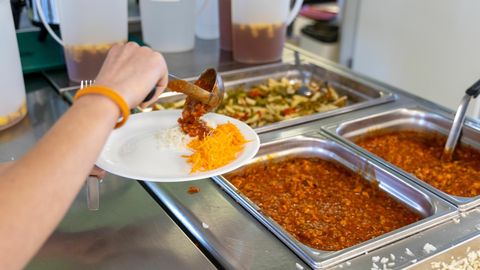
The EU-funded SchoolFood4Change project involved over 50,000 Estonian pupils in developing healthier school meals. In Estonia, the project was implemented by the Stockholm Environment Institute Tallinn Centre, the City of Tallinn, and Viimsi Municipality. Two Tallinn schools-Tallinn English College and Tallinn City Centre School-received gold-level recognition in the project.
EstoniaOver 50,000 Estonian schoolchildren participated in an international school meal experiment in which a new, healthier food menu was developed and school catering culture was transformed starting from 2022.
Children's role in menu design
The SchoolFood4Change project, funded by the EU's Horizon 2020 programme, was launched in January 2022. In Estonia, the project was led by the Stockholm Environment Institute (SEI) Tallinn Centre, the City of Tallinn, and Viimsi Municipality. The project aimed to link healthy nutrition with the daily life of schools and to involve children, teachers, and parents in this process.
Age Tamm, health promotion specialist at Tallinn Education Department, emphasised the importance of children's early eating habits: "Children's early eating habits influence their health and food choices for life. That is why schools play an important role in providing all children with a positive experience of healthy food and in building good eating habits regardless of their family background."
Changes in public procurement
During the project, the public procurement system also had to be changed to ensure healthier school meals. Internationally, more than 3,000 schools adapted their catering procurement conditions to offer children more sustainable and tasty food.
In Estonia, since 2023, Tallinn educational institutions' catering procurement has included a requirement that the service provider must hold an organic certificate from the Agricultural and Food Board, and at least 20 per cent of raw materials must be organic. In addition, the provision of at least one plant-based menu option per day is required, along with information work and the organisation of nutrition-related events.
Annika Vaikla, deputy mayor of Viimsi, highlighted how a smaller municipality was able to implement changes more flexibly: "As a smaller municipality, we were able to test new solutions more quickly, gather direct feedback, and make changes flexibly in cooperation with schools, parents, and catering providers."
Recognised schools in Estonia
Schools had the opportunity to earn bronze, silver, or gold status according to their contribution to developing the school's overall food culture. Worldwide, more than 400 schools received recognition.
In Estonia, Tallinn English College and Tallinn City Centre School received gold status. Silver status was awarded to Tallinn Arte Gymnasium, Randvere School, Ristiku Primary School, and Tallinna Mahtra Primary School. Bronze status was achieved by Haabneeme School, Kalamaja Primary School, Prangli Primary School, Tallinn Haabersti Gymnasium, Tallinn Art Gymnasium, Tallinn Rahumäe Primary School, Tallinn Tondi School, Viimsi School, and MLA Viimsi Kindergartens.
Evelin Piirsalu, senior expert at SEI Tallinn, explained the reason for the project's success: "During the project, we saw that a simple and clear framework, such as whole-school food culture, can be a powerful tool that helps schools teach topics related to food and nutrition in an engaging and practical way while bringing the broader school community together through various activities."
Materials and results created during the project will be available in the future to all schools both in Estonia and more broadly in Europe.
Open in app →