Aaviksoo: USA lacks the power to maintain the post-WWII world order
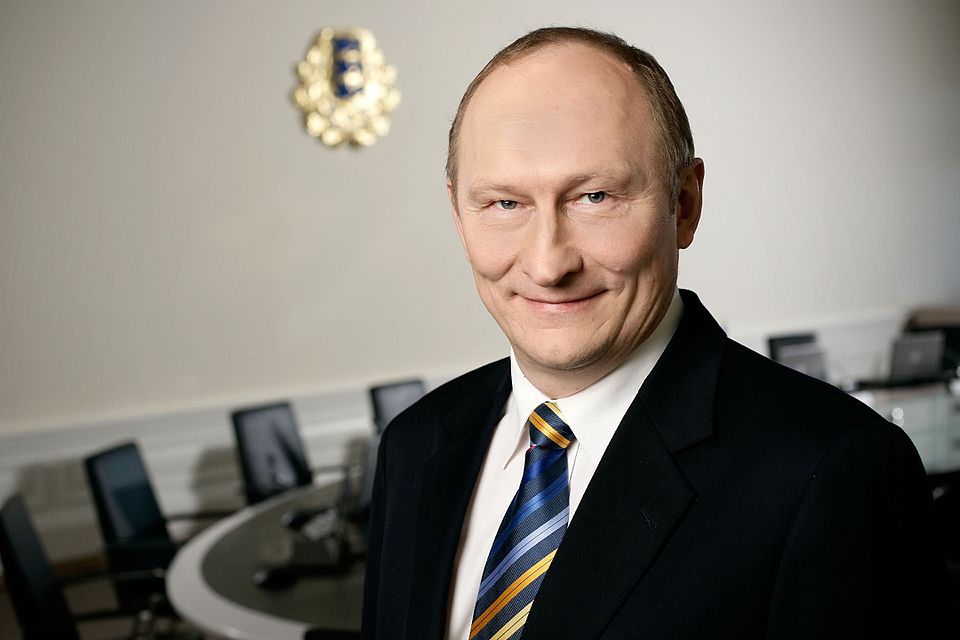
Former Estonian defence minister and academic Jaak Aaviksoo says the United States is not abandoning Europe, but simply no longer has the political, economic, or military strength to uphold the post-World War II global order. He also argues that reopening communication channels with Russia is inevitable, and criticises Estonia's foreign policy as at times too hot-headed.
PoliticsJaak Aaviksoo, former Estonian defence minister and rector, has warned that the era of Pax Americana is objectively over, and that Europe must accept greater responsibility for its own security. Speaking on the ERR web programme Otse uudistemajast, Aaviksoo said the United States is not deliberately abandoning its European allies, but rather lacks the capacity to sustain the international order it created after 1945.
«Those who did not understand this when the last plane left Kabul airport and the Americans withdrew from their 20-year effort to export liberal democracy, that was at the very least the moment when we should have realised that the world has different solutions,» Aaviksoo said.
A Multipolar World Demands New Thinking
Aaviksoo painted a picture of a world in which liberal Western democracy is just one among many competing systems. He pointed to China pursuing its own path, Russia rejecting the liberal democratic framework, India advancing independently with over a billion people, and Africa, soon home to more than 1.5 billion, where liberal democracy is unlikely to take hold in the coming decades.
«We must be able to cope in this multipolar world,» he said, adding that Europe should stop blaming the United States and instead recognise that the responsibility for Europe's development now rests far more squarely on European nations' own shoulders.
On the upcoming NATO summit, Aaviksoo expressed cautious optimism: «I believe a reasonable balance will be found between Europe, America, the British and Turkey. I think we will get a positive message from there.»
Talking to Russia Is Unavoidable
On the question of reopening dialogue with Russia, a call made recently by both Estonian President Alar Karis and Finnish President Alexander Stubb, Aaviksoo was unequivocal: there is no escaping it.
«One way or another, we must begin communicating with Russia. We must do so naturally, guided by our own interests, and ideally with sufficient leverage, militarily, economically, politically and ideologically,» he said.
He predicted that the hot phase of the war in Ukraine is likely to end within roughly a year's time horizon, though full Ukrainian territorial control remains far more uncertain. He called accusations of "scratching at the Kremlin's door" simply childish. «The idea that negotiation is necessary and unavoidable is fundamentally correct. But when and how to do it, that is too early to say today. But it must be done, and at some point we will get there,» he added.
On Russia's future trajectory, Aaviksoo advised realism: «We will never hold a victory parade on Red Square. There is no point in rhetorically talking about breaking Russia apart. We must deal with it as it is, eliminate or minimise the risks it poses.»
Estonia's Defence Spending Justified, But Rhetoric Too Loud
Aaviksoo affirmed that Estonia's security and defence policy is fundamentally correct. He endorsed the country's current defence spending level, 5% of GDP, as justified, given that Estonia's existential risk from its eastern neighbour will persist for the foreseeable future.
However, he offered pointed criticism of the tone of Estonian foreign policy. «We are perhaps too hot-headed and express positions in words that do not need to be said so loudly. Better to do it quietly and in deeds, a little more in the Finnish way, rather than in the manner of hot-headed politicians who climb onto every platform and wave all the flags,» he said, though he declined to single out the foreign minister personally.
He also urged Estonia to learn from countries with more than a thousand years of experience dealing with Russia, including Turkey, Germany, and France. «Criticising Turkey for its behaviour and assuming Turkey underestimates Russia is simply historically ignorant,» Aaviksoo said.
Open in app →