Aivar Usk: facts may not be enough to counter "climate crisis" myths
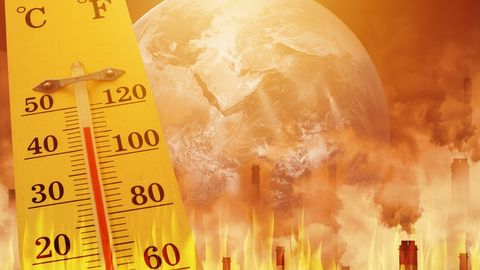
Electronics engineer Aivar Usk writes that against the backdrop of the climate law and the onset of summer, the use of the term "climate crisis" in the media has intensified again. An increasing number of climate realists attempt to counter this narrative with facts, but this does not seem to change the convictions of climate activists.
OpinionIn recent months, the phrase "climate crisis" has become more frequent in Estonian media, both in the context of climate law debates and as summer returns. Electronics engineer Aivar Usk believes that the number of climate realists armed with facts is growing, but their arguments seem to do little to deter climate activists.
Narrative versus data
According to Usk, it is paradoxical that the more scientific data on the actual extent and pace of climate change is presented, the more firmly activists' conviction about a "climate crisis" appears to take hold. Presenting facts may not be sufficient when the other side is based primarily on value-driven attitudes rather than empirical evidence.
Climate realists' main criticism is that the term "climate crisis" is often used with excessive dramatization in the media, leaving viewers with an impression of a situation that is actually more complex and multifaceted. They emphasize that scientific consensus on climate warming does not automatically equate to the inevitability of catastrophic scenarios.
What this means for public debate
Usk highlights that such a gap between factual arguments and activist rhetoric makes genuine public discourse difficult. When one side sees itself as the bearer of facts and the other as the defender of values, common ground is lost.
The question of whether facts alone are enough to break myths is becoming increasingly relevant in the broader context of information warfare, and the climate debate is one of the most vivid examples of this phenomenon in Estonia's contemporary public sphere.
Open in app →