Alan Greenspan, legendary Fed chairman who shaped global finance, dies at 99
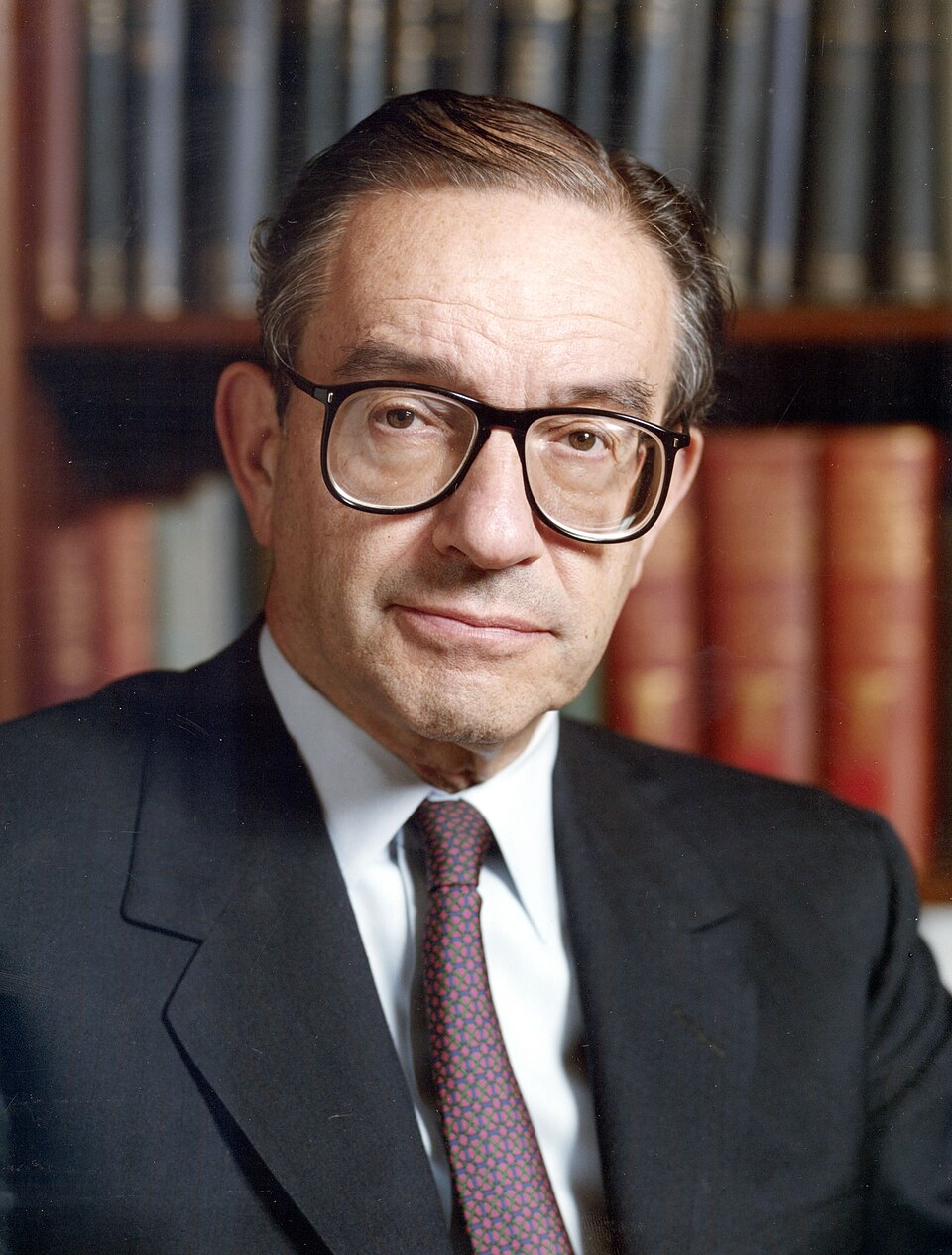
Alan Greenspan, who led the US Federal Reserve for nearly two decades and became one of the most influential economic figures of the 20th century, has died at the age of 99. He is credited with steering the US economy through its longest peacetime expansion, but also blamed for contributing to the conditions that led to the 2008-2009 global financial crisis. His career spanned advisory roles under multiple US presidents and left a lasting, and deeply debated, mark on global monetary policy.
EconomyAlan Greenspan, the former chairman of the United States Federal Reserve who spent nearly two decades as the most powerful central banker in the world, has died at the age of 99. His passing marks the end of an era in American and global economic history.
From Jazz to Wall Street
Born on 6 March 1926 in New York City, Greenspan grew up in a one-bedroom apartment with his mother and grandparents after his parents divorced when he was young. Showing an early aptitude for mathematics and a near-photographic memory for numbers, he initially pursued music, enrolling at the Juilliard School and later joining the touring jazz ensemble of Henry Jerome, playing clarinet and saxophone. But after deciding a music career was unlikely, he enrolled at New York University in 1945, graduating with a degree in economics in 1948.
His first job was at the Conference Board, a research organisation where he produced economic analyses. He later formed a partnership with William Wallace Townsend, the firm Townsend-Greenspan, and quickly earned a reputation on Wall Street for meticulous, data-driven analysis of the US economy.
Ayn Rand and the Free Market Faith
In 1952, Greenspan married for the first time, though the union ended within a year. Around the same time, he met the novelist and philosopher Ayn Rand, already famous for The Fountainhead and her passionate defence of capitalism. Rand initially nicknamed him "The Undertaker" for his serious demeanour and preference for dark suits, but the two became close friends. Her influence was profound: Greenspan became a committed libertarian and a vocal defender of free-market principles, a worldview that would define both his greatest achievements and his most damaging blind spots.
His analytical talents and free-market philosophy brought him into the Republican establishment. He served as an economic adviser to Richard Nixon's 1967 presidential campaign and later chaired the Council of Economic Advisers under President Gerald Ford. He also contributed to Ronald Reagan's successful 1980 campaign, though the Treasury Secretary post he hoped for went to others.
Nineteen Years at the Fed
In 1987, Treasury Secretary James Baker offered Greenspan the chairmanship of the Federal Reserve. His baptism by fire came just two months into the role, when Black Monday, 19 October 1987, saw US stock markets lose more than 20% of their value in a single day, the largest one-day percentage decline in US history. Alan Greenspan responded by injecting liquidity into the financial system and cutting interest rates, successfully preventing lasting economic damage.
His tenure became defined by an extraordinary period of growth and price stability. During Bill Clinton's second term, Greenspan resisted pressure to raise rates to cool a booming economy, wagering that rapid technological change was sustainably lifting productivity. His analysis proved correct: productivity growth roughly doubled between 1995 and 2003 compared to the prior two decades. Economist Paul Krugman quipped in 1997 that the model for forecasting US unemployment was simply «whatever Greenspan wants, plus or minus a random error reflecting the fact that he is not quite God».
By 1999, Greenspan appeared on the cover of Time magazine alongside Treasury Secretary Robert Rubin and his deputy Lawrence Summers, dubbed the "Committee to Save the World" for their handling of the 1997-1998 emerging markets crisis and the collapse of hedge fund Long-Term Capital Management.
The Shadow of 2008
Yet the same low-interest-rate environment that fuelled growth also helped inflate dangerous bubbles. Greenspan had warned of "irrational exuberance" in financial markets as early as 1996, but chose not to use interest rates to restrain the dot-com boom. When that bubble burst in the early 2000s, the Fed cut its key rate to just 1%, a policy critics argued contributed directly to the subsequent housing bubble.
Greenspan retired from the Fed in January 2006, handing the reins to Ben Bernanke. Barely two years later, the collapse of Bear Stearns, then Lehman Brothers, and the ensuing global financial crisis triggered a comprehensive reassessment of his legacy. His longstanding opposition to tighter regulation of financial derivatives, instruments at the centre of the meltdown, drew fierce criticism. Stanford economist John Taylor argued that loose monetary policy had inflated the housing bubble; others contended the Fed's failure to police predatory lending in the mortgage sector was the deeper failure.
Alan Blinder, who served as Fed vice-chairman under Greenspan from 1994 to 1996, offered a nuanced verdict: «He was magnificent on macroeconomic management, unemployment, inflation, but he always had a blind spot on regulation. They didn't lift a finger to stop it. And it mostly happened on Greenspan's watch.»
Just a month after Lehman's bankruptcy, Greenspan testified before Congress that he had «found a flaw» in the free-market ideology he had championed for decades. «Those of us who have looked to the self-interest of lending institutions to protect shareholders' equity, myself included, are in a state of shocked disbelief,» he said.
A Contested but Towering Legacy
In later years Greenspan partially walked back his post-crisis concessions, arguing that low short-term rates had played little role in inflating asset price bubbles, and publishing a book, The Map and the Territory, in which he concluded that traditional economic forecasting had failed by paying insufficient attention to behavioural economics and the potential for irrational market behaviour.
The regulatory failures preceding the 2008-2009 crisis were not Greenspan's alone: political leaders across both parties in the 1990s and 2000s championed risky financial instruments and resisted oversight. But as the most influential voice in global finance for nearly two decades, honoured with an honorary knighthood from Queen Elizabeth II and the Presidential Medal of Freedom from President George W. Bush in 2005, his choices carried exceptional weight.
His death closes a chapter on an era when a single central banker could move markets with a sentence, and when the faith in self-regulating markets ran deep enough to shape the world's financial architecture, for better and, ultimately, for worse.
Open in app →