Archive: How 15-year-old Kerli Kõiv from Elva won the Baltic Fizz Superstar 2002
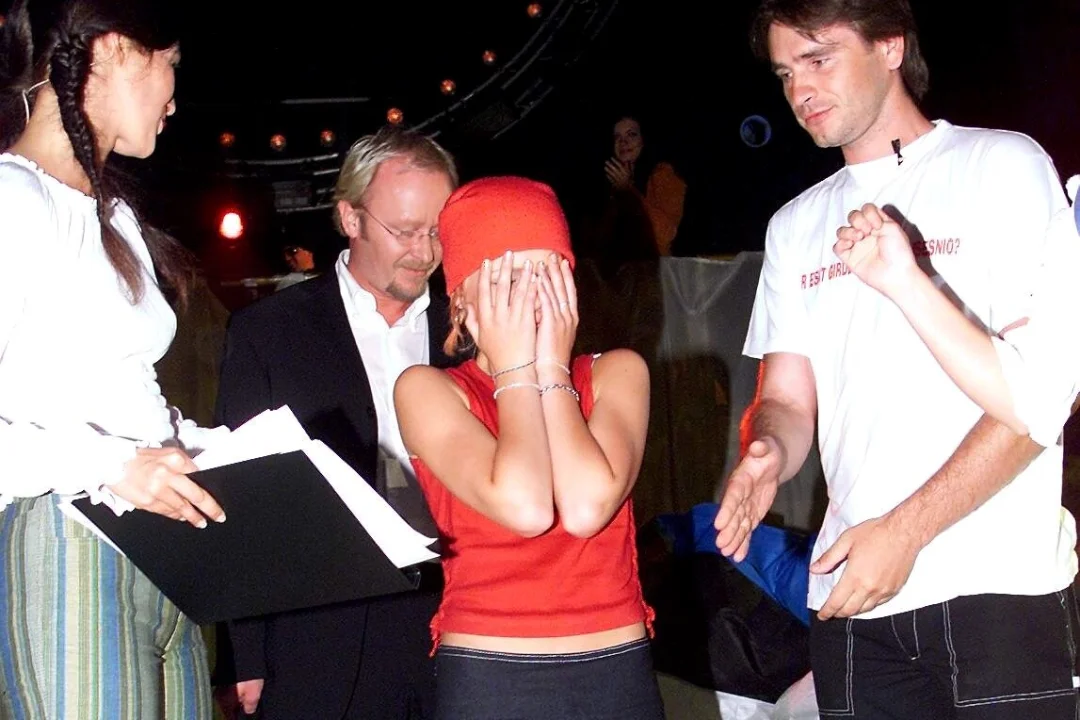
Twenty-four years ago, a quiet 15-year-old girl from Elva, Estonia named Kerli Kõiv won the Baltic talent competition "Fizz Superstar 2002" and secured an international recording contract with Universal Music. The six-month contest drew 1,500 young hopefuls from across the Baltics, with over nine million viewers following the series. Reflect.ee republishes the original reportage from the archive.
CultureRiga, June 21, 2002. The La Rocca nightclub still smelled faintly of smoke from the previous night's casino fire when a shy, petite girl with a hair clip stepped off a bus from Elva and quietly took a seat at the back of the makeup room. Her name was Kerli Kõiv, and she was about to change her life forever.
The Road to Riga
The Estonian team had gathered at 5:50 a.m. outside Tallinn's Olympia Hotel, where stylist Gerly Tinn arrived clicking across the pavement in transparent glass heels, spinning large suitcases with characteristic flair. The silver Hansabus carried jurors, backing vocalists Kaire Vilgats and Lauri Pihlap, and makeup artists southward toward the Latvian capital for the "Fizz Superstar 2002" grand finale.
Kerli had made her own way to Pärnu, a breakfast stop on the route, from her home in the small south Estonian town of Elva. When the bus was found to be full, she was quietly installed on a fold-out seat next to the driver. She smiled and said nothing. It was that quality, an unassuming naturalness that seemed to put everyone at ease, that people kept coming back to when asked why they thought she might win.
Backstage in the Makeup Room
In the dressing room at La Rocca, Kerli spread out a red top and an orange hippie-print shirt from her bag, asking which would go better with a black denim skirt-and-trousers ensemble. «I designed the jeans myself,» she added softly. The red-and-black combination was recommended.
When makeup artist Marge leaned in and whispered «You're going to win,» Kerli swatted the idea away: «Oh, go on!» Two days before the competition, she had told people it would be a miracle if she won, she simply didn't believe it. Others did. Hairdresser Kaire, fellow competitors, crew members, all kept arriving at the same conclusion. Her voice, her performance, her directness.
«What does a win mean to you?» a Latvian journalist asked at the afternoon press conference. «It means work, work, work, and no private life,» Kerli replied in fluent English, without a moment's hesitation. The room fell silent. Most of the other young contestants had spoken about paradise feelings and dreams coming true.
The Competition by the Numbers
"Fizz Superstar 2002" was a six-month Baltic talent search that registered 1,500 young people from Estonia, Latvia, and Lithuania. Of those, 850 were called to preliminary auditions, and 45, 15 from each country, were selected for the televised series. The show was followed by over nine million viewers across the Baltics throughout its run, and 140 people were involved in producing it. Competitors and crew collectively travelled more than 35,000 kilometres along the Tallinn-Riga-Vilnius circuit.
Nine finalists reached the La Rocca stage: six Lithuanians, two Estonians, and one Latvian.
A Win Nobody Doubted
The scoring system was elaborate, points from the public in all three countries, expert juries, and the contestants themselves all fed into the final tally. Jury member Laima Vaikule drew quiet grumbles for giving her maximum points exclusively to Latvia's Elena. But when the totals were calculated, Kerli had won by a large margin.
«I can't believe this,» she murmured, tears streaming down her face. She turned her back to the audience as a cramp ran through her shoulders, before Universal Music representative Gert Holmberg gently turned her back toward the cameras. Her younger sister Eliisa sprinted onto the stage and threw her arms around her.
The prize: an international recording contract with Universal Music. Competition press representative Reno Hekkonen explained that a standard Universal deal typically covers three album releases. A contract signing with Kerli was to follow shortly, after which the search for songwriters would begin.
More Than a Competition Win
Backstage, after the lights had dimmed and the shouting had faded, Kerli offered a thought that cut against the usual narrative of talent-show triumph. «I don't believe a record deal makes someone a star. Something has to be inborn, otherwise you'll never get there. The rest is work. Even if I hadn't won this competition, I would still have become a singer.»
Second place went to Lithuanian contestant Ruta Sciogolevaite, and third to fellow Lithuanian Daiva Starinskaite. The Estonian delegation returned home across the Tallinn–Riga–Vilnius circuit one last time, this time with a winner on board.
Open in app →