Asteroid mining faces unexpected obstacle: too fast rotation
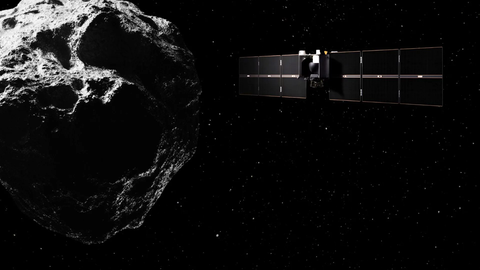
Scientists have discovered that one of the most promising space mining targets – an easily accessible asteroid – rotates so rapidly that landing on it is extremely difficult. The study casts doubt on previous hopes for a space mining industry.
TechnologySpace mining has long been on the wishlist of future technology dreams – the idea that asteroids could provide nearly unlimited amounts of valuable raw materials to help ease Earth's resource scarcity. Now, however, scientists have made a troubling discovery: one of the most attractive targets behaves quite differently than expected.
Too fast rotation
The concrete problem lies in the asteroid's rapid rotation. The asteroid in question orbits around its own axis at such a high speed that landing on it becomes extraordinarily risky and an extremely challenging technical task. Even if a spacecraft reaches the asteroid's vicinity, stabilizing its descent to the surface and remaining there is enormously difficult.
A challenge to cosmic gold rush
The study highlights a broader problem in space mining: beyond Earth's gravitational field, humanity faces many unprecedented obstacles that cannot be predicted using terrestrial measurements. This discovery casts doubt on the optimistic plans of several companies and research institutions, which envisioned commercial extraction of space resources in the coming decades.
Despite this obstacle, most experts do not consider space mining a dead idea. Rather, they stress that new research will help better plan future missions and select more suitable targets. Asteroid mining remains a key element of long-term space economy development, but the path there proves far more winding than initially thought.
Open in app →