Bertolt Brecht's Émigré Diaries Published in Russian for the First Time
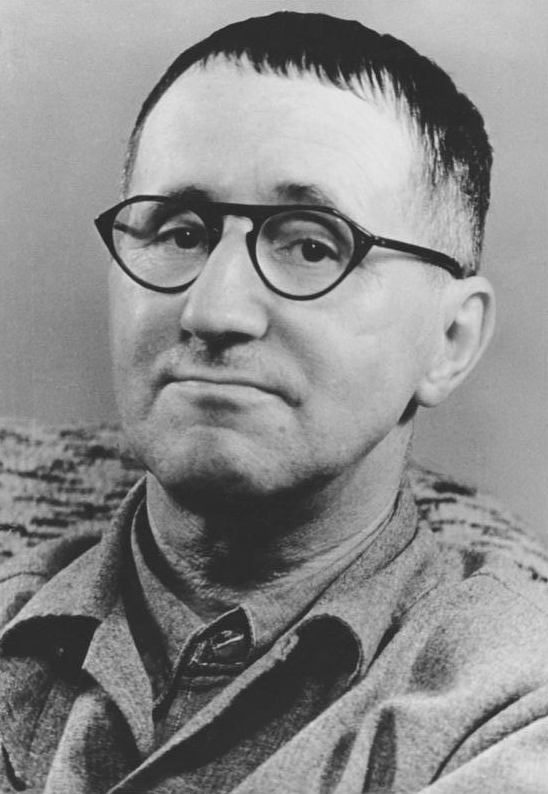
Publisher Individuum has released the Russian translation of German dramatist Bertolt Brecht's émigré diaries from 1938-1955, translated by Zoya Borozhnidova. The diaries cover Brecht's years of forced exile from Germany and his eventual return. Media outlets have published an excerpt spanning 19 January to 8 May 1945, when Brecht lived in the United States.
CulturePublisher Individuum has published for the first time in Russian the émigré diaries of German dramatist Bertolt Brecht, which he kept between 1938 and 1955. The translation was done by Zoya Borozhnidova. The diaries cover Brecht's forced exile from Germany and his eventual return.
A kaleidoscope of everyday exile life
The diaries are not merely a chronicle of the author's personal life. Brecht describes conversations with other exiles, pastes in newspaper clippings, and reflects on his theory of "epic theatre". Particular attention is drawn to his profound aversion to Hollywood, where he spent six years.
The publication preserves the appearance of the original diaries: sentences begin with lowercase letters, italics are used, and certain proper names are written entirely in capital letters-all of which has been carried through in the translation. Illustrations, newspaper clippings, photographs and more are positioned exactly where Brecht himself placed them.
May 1945: the moment of capitulation
In the published excerpt covering the period from 19 January to 8 May 1945, Brecht captures several significant moments. He describes a meeting with labour leader Sidney Hillman, where Germany's future was discussed; there are anecdotes about Chaplin, accounts of Roosevelt's death, and finally Nazi Germany's unconditional surrender.
The laconic beauty of the final line of the diary is striking: "Nazi Germany surrenders unconditionally. At six in the morning the president speaks on the radio. listening I watch the blooming California garden."
Brecht as exile and theorist
The diaries also reveal Brecht's working habits-he writes poetry while standing at a typewriter so he can pace around, and works on a poetic treatment of the Communist Manifesto. Conversations with Chaplin, Paul Dessau, and other émigré artists provide evidence of a vibrant intellectual life in exile.
Open in app →