Borrell: European Commission overstepping its bounds in EU foreign policy
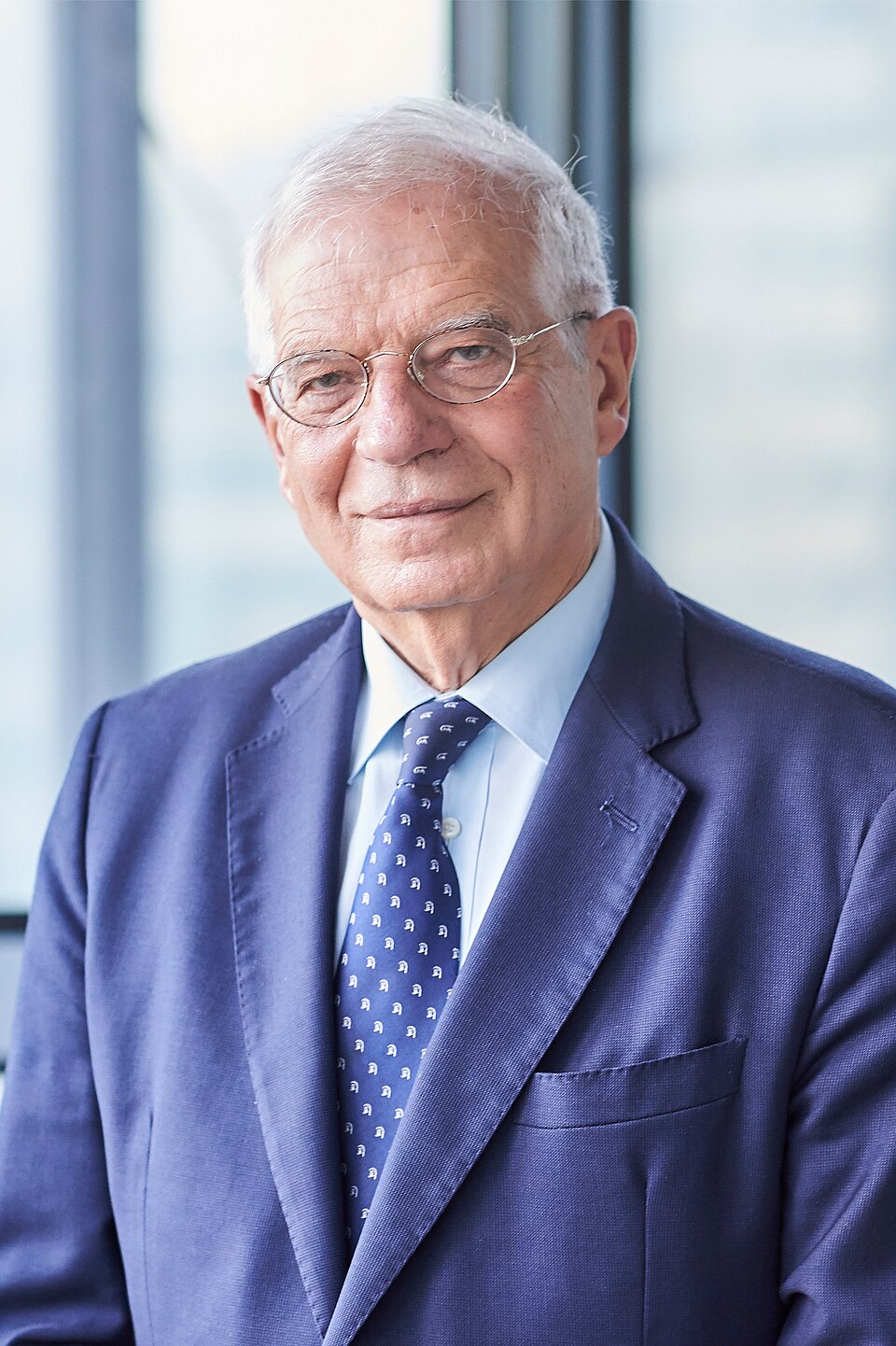
Former EU foreign policy chief Josep Borrell has sharply criticised the European Commission for overreaching its institutional mandate in diplomacy and defence, saying the Commission "does not speak for the European Union." His remarks are the most direct public condemnation yet by a former High Representative of an institutional rivalry that has simmered throughout Ursula von der Leyen's tenure.
PoliticsFormer EU High Representative Josep Borrell has launched his most forceful public attack yet on the European Commission, accusing it of systematically overstepping its legal mandate in foreign and defence policy, and sowing confusion on the world stage about who actually speaks for Europe.
In an interview with Politico, Borrell said the increasingly overlapping roles of the Commission and the European External Action Service (EEAS) have created serious disarray in the EU's external relations.
«The Commission does not speak on behalf of the European Union. The Commission represents only itself,» he declared.
A Long-Running Institutional Feud
Although current and former officials have privately complained for years that the Commission has steadily expanded its diplomatic reach, Borrell is the first former High Representative to state publicly and explicitly that the EU's executive arm has crossed legal boundaries.
The tension mirrors difficulties experienced by current High Representative Kaja Kallas, who has similarly clashed with Commission President Ursula von der Leyen over the division of diplomatic responsibilities.
As a recent illustration, Borrell pointed to Mediterranean Commissioner Dubravka Šuica, who met with Israeli officials last week, just days after Israeli Foreign Minister Gideon Saar severed ties with Kallas following reports that she had compared Israel's treatment of Palestinians to South Africa's apartheid regime.
«With what mandate does a commissioner travel to Israel to declare that the EU and Israel love each other, while at the same time Israel refuses to communicate with the EU's High Representative for Foreign Affairs?» Borrell asked pointedly.
Treaty Boundaries and Defence Ambitions
Borrell grounded his argument in the EU treaty itself, which specifies that the Commission "shall ensure the Union's external representation", except in matters of common foreign and security policy. He drew a firm distinction between the external dimension of EU policies, which falls within Commission competence, and EU foreign policy proper, which belongs to member states.
«Of course the Commission has policies that have an external dimension. But that is one thing. It is quite another to try to shape and define the Union's position on the war against Ukraine, on the Israeli-Palestinian conflict, or on other Middle Eastern crises. That is not external relations. That is foreign policy,» he said.
The criticism extends to defence. In 2024, von der Leyen appointed former Lithuanian Prime Minister Andrius Kubilius as the EU's first Commissioner for Defence, tasking him with building a European Defence Union. Borrell argued this too falls outside the Commission's remit.
«The Commission cannot play the role of some shadow Pentagon,» he said flatly, insisting that «defence policy is intergovernmental policy» and that the founding treaties assign responsibility for a European Defence Union to the High Representative, not the Commission.
Borrell's Own Complicated Record
Borrell himself was no stranger to controversy during his tenure. His 2021 visit to Moscow, where he failed to publicly rebuff Sergei Lavrov's claim that EU leaders had lied about the poisoning of Alexei Navalny, drew heavy criticism. His outspoken accusations against Israel, including charges of genocide and the largest ethnic cleansing since World War II, also generated significant backlash.
On his relationship with von der Leyen, Borrell was characteristically blunt: «It was not easy, but we tried to manage.»
He also recalled how von der Leyen and then-US President Joe Biden launched the EU-US Trade and Technology Council in 2021, with Secretary of State Antony Blinken on the American side and no seat at the table for the High Representative on the European side.
«When you start building such an institutional framework, conflict is inevitable,» Borrell warned, adding that the system «needs to be made coherent.»
Open in app →