Central European drought could raise grain prices for Estonian farmers
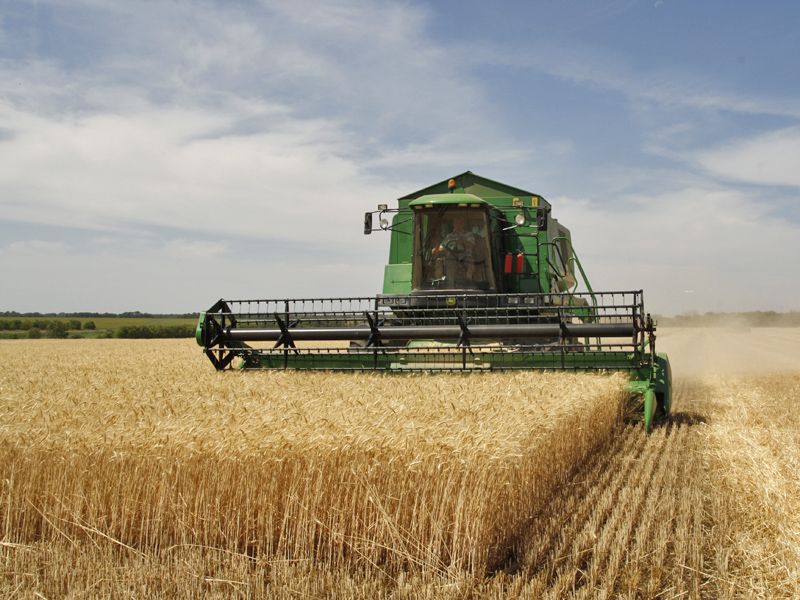
A heat wave sweeping Central Europe is not currently affecting Estonia's grain harvest or grocery shelves, but may cause fluctuations in the grain market. Experts hope that a price increase could benefit Estonian farmers, whose profits are eaten away by high fuel and fertilizer costs. Estonia's expected harvest this year is above average.
EconomyThe heat wave devastating Central Europe has not yet affected Estonia's grain fields or stores, but prices on food commodity markets may begin to move, experts warn. In North Estonia, grain fields are still green, in the south already yellow, and combines are nowhere to be seen, but the harvest period will begin in a few weeks.
Panic moves markets
Margus Ameerikas, development director of Baltic Agro, explained to ERR that heat waves cause market fluctuations through panic. "Any kind of panic causes market fluctuations, and a heat wave is indeed one of the panic triggers. Plants don't grow in such heat," he said. He added that Estonia experienced a similar situation a few years ago: the harvest looked good, but at the last moment a heat wave hit and yields fell. The same could now happen in Europe.
Tarmo Timmi, managing director of Jaagumäe farm, noted that high fuel, energy and fertilizer prices burden South-East Estonian farmers especially hard, as transport costs fall on their own shoulders.
Estonia's harvest promises to be above average
Margus Ameerikas stressed that there is no reason to fear food shortages or famine. Harvesting of grain in Europe began before the heat wave arrived, and global supply is sufficient: warring Ukraine exports six million tonnes of grain per month, while Estonia's annual production is one and a half million tonnes, two-thirds of which goes to export.
Additionally, Estonia's grain sector has undergone strategic changes in recent years. "We have transformed from a producer of spring crops to a producer of winter crops, which can grow much better if they receive moisture in autumn and winter successfully. This past winter, almost everything survived, there was little damage. So the harvest should be above average," explained Ameerikas.
A rise in grain prices could benefit Estonian farmers
A possible rise in grain prices offers hope to farmers, as current prices have lagged behind the price increases in fuel and fertilizer. "If panic drives prices up, it could actually be beneficial for our farmers. If someone somewhere is doing badly, another can gain something," acknowledged Ameerikas.
Triin Tapver, macroeconomist at LHV, stressed, however, that the current heat wave is not yet affecting grocery shelves. Long-term effects will manifest in two ways: higher energy prices will make food storage more expensive, and field yields could fall, which will affect food commodity prices. If heat periods become longer and more frequent, the situation could change in the future.
Open in app →