Chancellor of Justice tells Riigikogu: oversight of law enforcement is insufficient
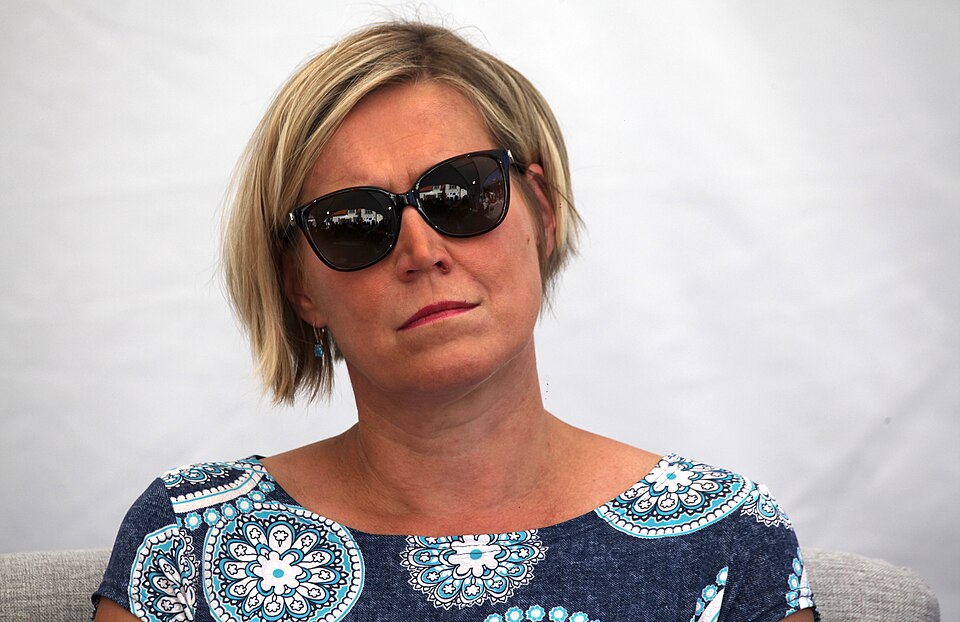
Chancellor of Justice Ülle Madise told the Riigikogu's constitutional committee on June 16 that she effectively lacks the powers to reject prosecutors' requests to lift MPs' parliamentary immunity. She also raised broader concerns about inadequate oversight of law enforcement agencies and the erosion of communications privacy protections.
EstoniaChancellor of Justice Ülle Madise told Estonia's Riigikogu constitutional committee that the current legal framework leaves her virtually powerless to push back against prosecutors seeking to strip MPs of their parliamentary immunity, and that oversight of law enforcement in Estonia is broadly insufficient.
Immunity requests and limited powers
Madise appeared before the committee on June 16 alongside Odin Vosman, senior adviser in the Chancellor of Justice's office. She explained that prosecutors rarely submit immunity-lifting requests if there is a strong likelihood that the Chancellor will send the request back. However, under the current Chancellor of Justice Act, a request can only be returned if it is "manifestly unfounded", meaning there is no room for dispute, a threshold so high that prosecutors would not file a charge under those circumstances anyway.
In practice, this means Madise reads case materials and sees evidence, but has no legal authority to assess whether that evidence was gathered lawfully, or to evaluate its admissibility, the timing of proceedings, or potential political motivations.
Committee chair Ando Kiviberг (Eesti 200) said after the session that the committee had received confirmation that the Chancellor could have significantly broader powers when evaluating prosecutorial materials. «Having heard the Chancellor of Justice, we got confirmation that the Chancellor could have considerably more authority in assessing prosecution materials and presenting a proposal to the Riigikogu when deciding on immunity,» he told ERR.
Communications secrecy under scrutiny
The committee also examined the constitutional guarantee of communications privacy, which permits surveillance only by court order and only to prevent or solve a specific crime. Madise noted that in practice the concepts of crime prevention and pre-emption have become blurred, and data collection is sometimes used for broader prophylactic purposes, effectively enabling large-scale data gathering without any specific suspicion against an individual.
Committee member Kalle Laanet, who has himself had his parliamentary immunity lifted, asked whether strengthening civilian oversight of law enforcement could help restore public trust without dismantling existing investigative tools. Madise acknowledged that public sentiment has shifted dramatically: what was once broadly accepted as targeting only a handful of bad actors is now fuelling widespread distrust of law enforcement, though she cautioned that this distrust is not entirely warranted, as officials working under constrained resources are doing their best.
She identified the core problem as inadequate supervisory capacity, both at the ministerial level and within the Chancellor of Justice's own office. She recalled a previous case in which unlawful and unsupervised use of banking secrecy was discovered only after painstaking investigative work, because those involved were unwilling to disclose information and a routine formal inquiry would have yielded nothing.
Call for clearer legislation
Madise said the clearest path forward would be to define in law exactly what communications privacy protection covers. Such a definition would fall within the bounds of the Constitution and would give the Riigikogu the tools to establish more precise regulation. She stressed that fighting crime is often used as a justification for questionable practices, but that justification does not make unlawful conduct acceptable.
The constitutional committee session was attended by Katrin Kuusemäe and Kalle Laanet (Reform Party), Lauri Laats (Centre Party substitute), Evelin Poolamets (EKRE), Helir-Valdor Seeder and Ants Frosch (Isamaa), Tanel Tein (Eesti 200), and Jaak Valge.
Open in app →