Cucumber Grower's Guide: How to Recognize Powdery Mildew and Save Your Summer Harvest
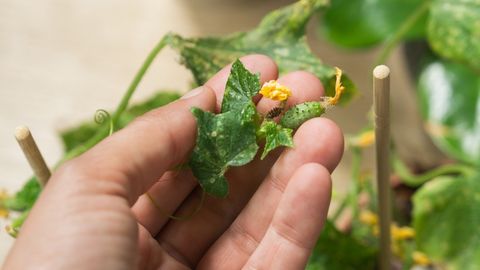
Powdery mildew is one of the most common diseases affecting cucumber plants, spreading extremely rapidly both outdoors and in greenhouses. With cucumbers, it is important to distinguish between two different fungal diseases: true powdery mildew and downy mildew. Early recognition of both diseases is key to saving your crop.
CultureFor many Estonians, the summer garden is one of life's greatest pleasures, but cucumber growers face one of the most common threats each season: powdery mildew. This fungal disease can spread with striking speed both in open fields and in greenhouses, destroying an entire summer harvest.
It is important to understand that cucumbers are threatened not by one disease but by two different conditions that are easily confused: true powdery mildew and downy mildew. Each has distinct symptoms and different treatment methods, making an accurate diagnosis essential.
True Powdery Mildew
The main characteristic of true powdery mildew is a white powdery coating that first appears on the upper surface of the leaf. The disease spreads in warm, dry weather and thrives with large temperature fluctuations between day and night. Infected leaves begin to turn yellow as they develop and eventually dry out.
Downy Mildew
Downy mildew is an even more dangerous disease. It can be identified by yellowish-orange spots appearing on the upper side of the leaf, while the underside shows grayish-purple fungal growth. Downy mildew prefers cooler, moist conditions and spreads particularly rapidly in greenhouses.
How to Save Your Crop
Prevention is the best defense against both diseases: ensure adequate air circulation, avoid wetting the leaves, and maintain sufficient spacing between plants. Infected leaves must be removed immediately and destroyed, not composted. If necessary, suitable fungicides can be used, but more environmentally friendly methods include hydrogen peroxide or sodium bicarbonate solutions.
Open in app →