Day 1582: Zelensky says Belarus-Ukraine border drone relays have gone dark
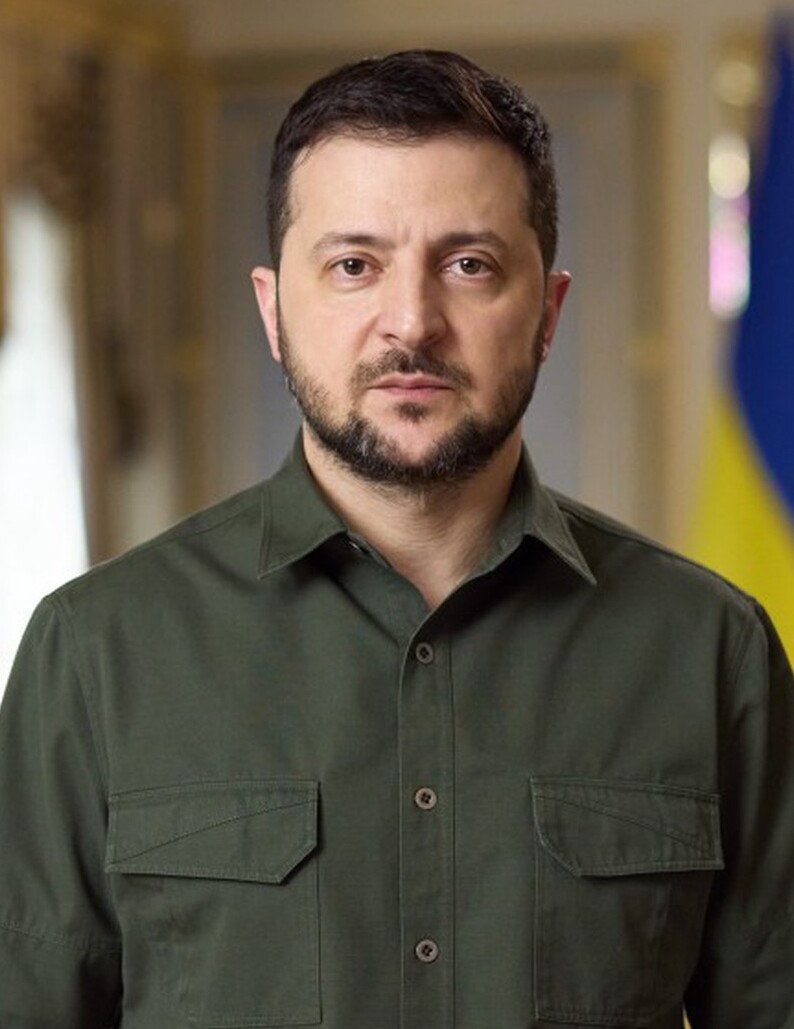
Ukrainian President Volodymyr Zelensky announced on June 24, 2026 that signal relay stations along the Belarus-Ukraine border, used to guide Russian drones, have ceased operating since June 22. Meanwhile, Moscow's Kapotnya oil refinery, struck twice by Ukrainian drones this month, is expected to remain offline until at least the end of 2026, deepening Russia's fuel shortages. Ukrainian forces also struck air defence systems and military airfields in Crimea, while multiple fires were reported across the peninsula following overnight drone attacks.
PoliticsUkraine's war entered its 1,582nd day on Wednesday, June 24, 2026, with a string of significant developments on the battlefield and in the energy war, as Volodymyr Zelensky confirmed that Russian drone-guidance relay stations near the Belarusian border have gone silent.
Border relays go dark
Speaking to journalists, Zelensky said the relay stations along the Belarus-Ukraine border that had been used to guide Russian strike drones stopped functioning on June 22. He said he had received the information from Commander-in-Chief of the Ukrainian Armed Forces Oleksandr Syrskyi and from Ukrainian military intelligence, though it remains unclear whether the equipment has been physically dismantled.
Ukrainian Border Guard Service spokesman Andriy Demchenko said that in recent days, Ukrainian border guards had recorded a sharp drop in the intensity of Russian strike drone incursions through the Chernihiv region, and that mass Shahed drone flights along the Belarus-Ukraine border had effectively ceased.
The relay stations had been identified by Zelensky as equipment used from Belarusian territory to correct drone strikes on Ukraine. On June 19, Zelensky issued an ultimatum to Belarusian leader Alexander Lukashenko demanding their removal within one week, warning Ukraine would destroy them if Minsk did not act. Lukashenko made no public comment on the ultimatum.
Moscow refinery offline until year-end
Reuters, citing two industry sources, reported on Wednesday that the Moscow oil refinery in the Kapotnya district, owned by Gazprom Neft and struck twice by Ukrainian drone attacks this month, is unlikely to resume operations before the end of 2026. Satellite imagery has confirmed damage to two crude processing units and several storage tanks. «The repairs will take at least six months,» one source told the agency. Gazprom Neft declined to comment.
The shutdown significantly complicates Russia's efforts to contain a widening fuel shortage that has become visible in recent days across numerous regions, including Moscow itself.
No peace talks agreement, Peskov says
Kremlin spokesman Dmitry Peskov told reporters Wednesday that there are no agreements in place for continuing peace negotiations with Ukraine. «No, there are no agreements,» Peskov said, adding that this reflects President Vladimir Putin's consistent position. Peskov also said Moscow is grateful to US envoys Steve Witkoff and Jared Kushner for their mediation efforts and indicated that contacts between the parties would continue.
Strikes across Crimea and deep into Russia
Ukraine's Security Service (SBU) reported that its Alpha special operations unit struck air defence systems near the Kerch Strait and hit infrastructure at the Saky and Hvardiyske military airfields in Russian-occupied Crimea. According to preliminary SBU data, four aircraft hangars at Saky were destroyed, along with two S-400 surface-to-air missile launchers and two Pantsir-S1 systems near Kerch.
OSINT monitoring channels reported multiple fires across Crimea following overnight drone attacks on June 22-23, including at the Nasosnaya-2 power substation in the Sovetsky district, at the Kerch combined heat and power plant, at the TES-Terminal oil products storage facility in the Kerch port, and at rail infrastructure. A smoke plume of 47 kilometres was recorded by satellite over Kerch. Several districts of the peninsula experienced power outages.
Ukrainian drones also struck the city of Orenburg in Russia. Governor Yevgeny Solntsev said several drones were downed over an industrial facility but did not specify the target. Ukrainian monitoring channel Exilenova+ claimed the strike targeted the Orenburg gas processing plant; this has not been officially confirmed.
Fuel rationing spreads in Russia
Kursk Oblast announced fuel sales restrictions, prohibiting the sale of petrol in canisters while stopping short of imposing a per-vehicle litre limit. Governor Alexander Khinshtein said the measure was introduced due to surging demand. «The panic buying only worsens the situation, as it provokes a deficit,» he said. Restrictions on fuel sales have now been introduced in multiple Russian regions following Ukrainian drone strikes on refineries and fuel infrastructure in May and June. In occupied Crimea, private petrol sales have been halted entirely.
Konotop attacked; Kyiv-Pechersk Lavra damage assessed
Russian forces struck civilian infrastructure in the centre of Konotop in Sumy Oblast with drones on Wednesday, wounding four people including a teenager, two women, and a man, according to Sumy Oblast military administration head Oleh Hryhorov.
The damage from the earlier Russian strike on the Kyiv-Pechersk Lavra, one of Ukraine's most sacred UNESCO World Heritage sites dating to the early 11th century, has been estimated at €40 million by Austrian public broadcaster ORF, citing Ukrainian officials. Restoration work could be completed by 2027 if sufficient funding is secured. The Lavra's director general Maksym Ostapenko stressed that work must not stop for a single day. «The issue of cultural heritage and the preservation of our shrines is part of the psychological war Russia is waging against Ukraine,» he said in an interview with Ukrinform.
Sevastopol meanwhile continued to suffer power outages and transport disruptions following overnight drone strikes. Moscow-appointed Governor Mikhail Razvozzhayev said trolleybuses were not running and kindergartens had been placed in a special operating mode, pointing to an attack on energy infrastructure near the Balaklava power station.
According to Ukraine's General Staff, total Russian losses since the February 2022 invasion now stand at approximately 1,395,790 personnel, 12,056 tanks, 24,816 armoured fighting vehicles, and 369,888 tactical drones.
Open in app →