Dry toilets as future infrastructure: Estonian experts discussed water crisis solutions
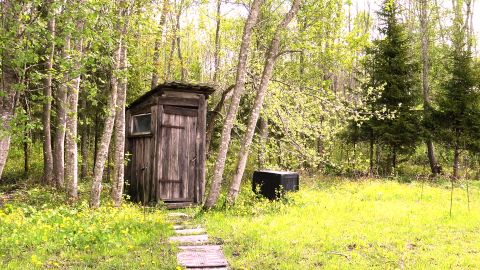
A conference took place in Estonia where scientists and experts discussed the role of dry toilets and composting toilets in both everyday life and crisis situations. Robin Erih Kubpart, a researcher at Estonian University of Life Sciences, addressed wastewater management in small settlements, emphasising that waste should be seen as a resource. Experts believe that dry toilets may be part of future resilient infrastructure.
EstoniaA conference was held in Estonia where experts and scientists gathered to discuss the future of dry toilets and waste-free sanitation solutions in both regular use and in the context of crisis situations.
Waste as a resource
Robin Erih Kubpart, a researcher at Estonian University of Life Sciences, addressed wastewater management in small settlements at the conference. The core principle of his presentation aligned with the conference's main theme: waste should not be viewed merely as a problem, but as a potential resource. On the same topic, gardener Piret Pihtjõe and designer Vello Laanemaa presented the use of composting toilets in homes, gardens, and shelters.
Raili Ilves from the NGO Elurikas Maarjamaa provided an overview of excreta recycling in an urban community garden, offering a practical example of how urban space can be part of a closed nutrient cycle.
Mobile solutions for dispersed settlements
Finnish researchers Veijo Pönni (UTU) and Antti Grönroos (VTT) presented a mobile wastewater treatment device under the ReNuW-Hubs project, aimed at areas with dispersed settlement patterns. Such a solution offers an alternative to centralised sewer networks where their construction is too costly.
An old idea, new meaning
Although dry toilets are often considered outdated technology, many experts offer them a fresh interpretation. Cities could use them to become more resilient, reduce drinking water waste, and restore nutrient cycling, which has been broken in industrial society.
At the conclusion of the conference, the so-called off-grid systems at Pure Water Theme Park were demonstrated, showcasing autonomous electricity generation, composting, and toilet solutions that operate independently of large networks.
At a time when Europe is debating energy security and crisis preparedness with increasing urgency, the dry toilet may prove to be not a nostalgic rural curiosity, but an essential part of infrastructure that works even when other systems fail.
Open in app →