Education wage pressure: state school salary rises create confusion in municipalities
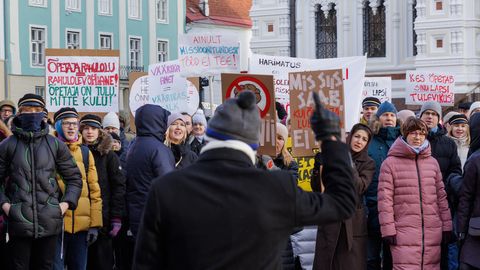
The minimum wage increase for state school teachers has created confusion and raised questions about wage disparities and the capacity of municipalities to keep pace. Robert Lippin, education advisor to the Estonian Association of Cities and Municipalities, acknowledged that the situation is difficult. Discussions are also underway about the state's role in education funding.
EstoniaThe minimum wage increase for state school teachers has created confusion across Estonia, raising questions about teacher wage disparities, the state's role, and the capacity of local municipalities to keep pace with the salary increases.
Municipalities under pressure
Robert Lippin, education advisor to the Estonian Association of Cities and Municipalities, made no attempt to hide his concerns: "I have no pleasant words." According to him, the wage issue has become particularly painful for local municipalities, which must find resources to maintain parity with the state.
The problem lies in the fact that the minimum wage increase established in state schools creates pressures in municipal education as well, but the budgetary capacities of municipalities vary greatly. Small rural municipalities and towns find it far more challenging to keep pace with the tempo set by the state.
Funding model needs review
The question of what the state's role should be in financing education as a whole has also come to the fore. The current system, in which responsibility is divided between the state and local municipalities, appears to create a situation where teacher salaries can differ significantly across different regions, depending on how wealthy the respective municipality is.
According to education experts, the funding model would require a thorough review to ensure more uniform and fair compensation for all Estonian teachers, regardless of which school or region they work in.
Open in app →