Estonian Defence Forces chief Merilo visits Ukraine front line
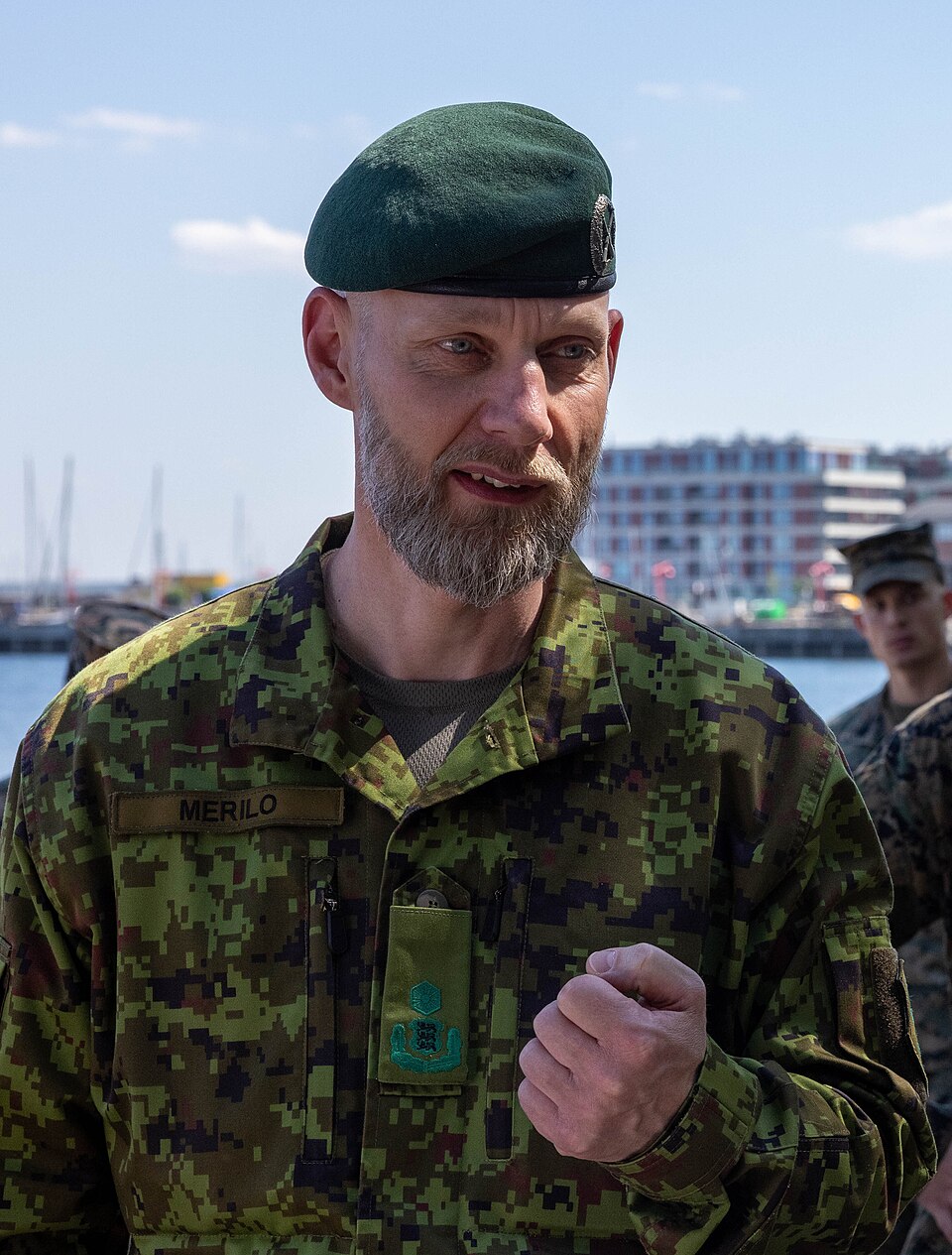
Estonian Defence Forces Commander Lieutenant General Andrus Merilo visited Ukraine on Tuesday, June 16, touring frontline military command structures and combat units alongside Ukrainian Armed Forces Supreme Commander Oleksandr Syrskyi. The visit comes amid a major escalation of hostilities, with Russia launching mass drone and missile attacks overnight that killed at least three civilians and wounded 68 across Ukraine. Ukraine struck back with a drone attack on Moscow's Kapotnya oil refinery, halting operations at one of Russia's largest fuel-processing facilities.
PoliticsEstonian Defence Forces Commander Andrus Merilo visited Ukraine on Tuesday, June 16, making a frontline trip to military command headquarters and active combat units in the country's southeast. The visit aimed to assess battlefield conditions and better understand the operational needs of Ukrainian forces.
Syrskyi escorts Estonian commander
Merilo was accompanied throughout the visit by Ukrainian Armed Forces Supreme Commander Oleksandr Syrskyi, who confirmed the trip on social media. The programme included meetings with the command of Ukraine's air assault forces, airborne brigade commanders, as well as the leadership of unmanned systems forces and attack drone unit commanders.
«For our partners, it is extremely important to see the real situation on the front line, to understand the needs of Ukrainian soldiers, and to witness the effectiveness of the assistance being provided on the ground,» Syrskyi said.
Particular attention was devoted to drone warfare, a domain that has become one of the defining features of the Russia-Ukraine conflict. Estonia has been among the most consistent supporters of Ukraine among NATO allies relative to its size, and visits of this kind allow Tallinn to directly assess how its military aid is being used and what further support is most needed.
Russia launches mass overnight strikes
The visit took place against a backdrop of intensified Russian attacks. Russia launched a mass aerial assault overnight into June 16, firing 132 attack drones, including Shahed-type munitions, and two Iskander-M ballistic missiles. Ukrainian air defences intercepted or deflected 114 drones, but at least 16 drones and both missiles struck nine targets.
Regional authorities reported at least three civilian deaths and 68 injuries across the country. Among the worst incidents was a strike on a passenger bus in Kherson, which killed one man and wounded six others. In Kharkiv Oblast, 22 people were injured including four children, with Russian forces deploying rockets, guided aerial bombs, Shahed and Molniya drones, and FPV drones. Zaporizhzhia Oblast reported 11 injured, with Russian forces conducting 798 attacks on 47 settlements in a single 24-hour period.
Volodymyr Zelenskyy accused Russia of deliberately targeting the UNESCO-listed Kyiv-Pechersk Lavra monastery complex with two drones during Monday night's attack, causing a fire in one of the historic buildings. He said at least 11 people were killed across Ukraine in that overnight strike.
Ukraine hits Moscow oil refinery
Ukraine struck back on June 16 with a drone attack on the Kapotnya oil refinery in southeastern Moscow, operated by Gazpromneft and considered Russia's fourth-largest refinery. Two anonymous fuel industry sources cited by Reuters said the strike halted operations at the plant's main oil distillation unit, which accounts for more than half of the facility's daily processing capacity.
Moscow Mayor Sergei Sobyanin confirmed on Telegram that 25 drones were destroyed over the city, with one damaging refinery infrastructure, stating no casualties were reported. Ukraine's General Staff said the facility's primary processing unit caught fire. Zelenskyy confirmed the operation was part of Ukraine's long-range strike campaign targeting Russian energy infrastructure.
«Russia must be forced to stop the war against our people, and Ukraine's long-range weapons are an essential part of that pressure,» he said, noting that Ukraine's Security Service, unmanned systems forces, special operations forces, and military intelligence all participated.
The Kapotnya plant supplies jet fuel to several major Moscow-area airports including Domodedovo, Vnukovo, Sheremetyevo, and Zhukovsky, and has an annual crude oil processing capacity exceeding 12 million tonnes. Russia's Tatneft company subsequently imposed fuel sale restrictions at all its petrol stations nationwide, limiting private cars to 30 litres per transaction and accepting only cash payments, according to the Interfax news agency.
G7 summit and diplomatic pressure
The military developments unfolded alongside the G7 summit in France, where Zelenskyy held meetings with several Western leaders including Donald Trump and Emmanuel Macron. Zelenskyy described his encounter with Trump as «very positive», saying both leaders agreed that Russia cannot win the war.
«Russia will not win. They are losing enormous numbers of people and must reach an agreement as quickly as possible,» Zelenskyy said. He also expressed optimism about U.S. air defence support, saying Trump was «very certain that they can help us with missiles», while Ukraine continues negotiations for a licence to manufacture Patriot missiles domestically.
German Foreign Minister Johann Wadephul said he believes peace negotiations with Moscow could begin this summer, arguing that neither side holds a decisive military advantage. «Now there is a chance, I think, to start talks this summer,» he said, adding that Putin «may now be in a position where he must consider this seriously.»
Kremlin spokesman Dmitry Peskov rejected any prospect of a Putin-Zelenskyy summit on the sidelines of G7, saying there are no active communication channels between Kyiv and Moscow to arrange such a meeting.
Estonia's frontline intelligence
Merilo's visit reinforces Estonia's commitment to Ukraine and gives the Estonian military direct insight into modern warfare, particularly drone combat and unmanned systems, areas where Ukraine has developed unparalleled operational experience. Similar visits have been made in recent months by the defence chiefs of Norway and Germany, as well as other senior Western officials.
Since Russia launched its full-scale invasion on February 24, 2022, Ukraine's General Staff estimates Russian losses at approximately 1,385,420 military personnel, along with 12,026 tanks, 436 aircraft, and 353 helicopters.
Open in app →