Estonian MPs: high defence spending here to stay, even after Ukraine war ends
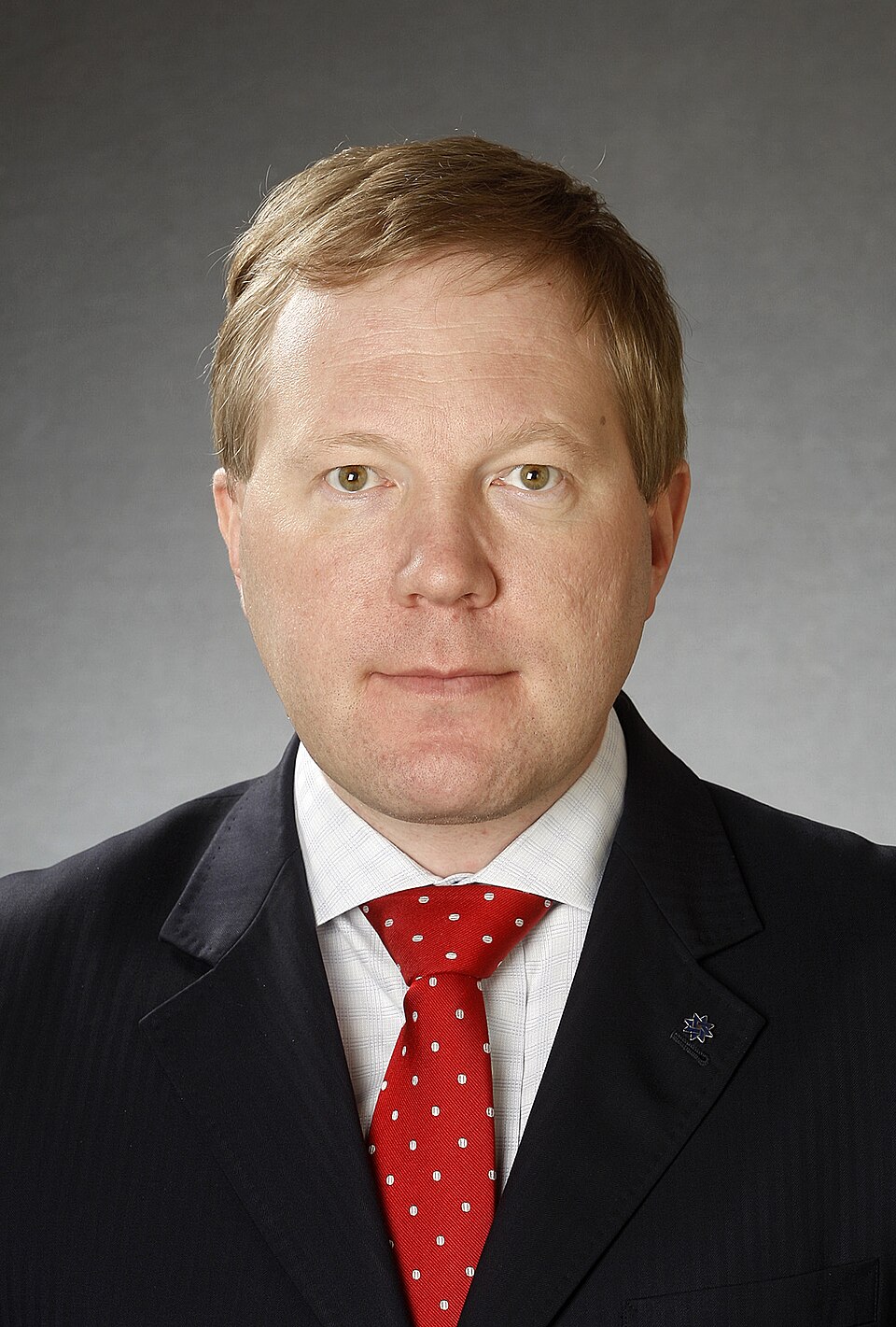
Senior Estonian parliamentarians Kalev Stoicescu and Marko Mihkelson say Estonia must remain prepared to sustain elevated defence budgets for the foreseeable future, regardless of how the war in Ukraine concludes. Education Minister Kristina Kallas also warned that accelerating deficit reduction while the war continues would effectively mean cutting defence. The debate comes as Estonia's ruling Reform Party has proposed trimming the budget deficit by 0.5% per year while keeping defence spending ring-fenced.
PoliticsEstonia's top parliamentary security and foreign policy chairs say the country should not expect relief from high defence spending any time soon, and that even an end to the war in Ukraine may not change that calculus.
Kallas: war makes faster deficit cuts impossible
Kristina Kallas, Estonia's Minister of Education and Research (Eesti 200), set the tone on Monday when she told Vikerraadio's "Uudis+" programme that cutting the budget deficit at an accelerated pace while the war in Europe continues is simply not feasible. «As long as we have to deal with defending Estonia, defending Europe, and supporting Ukraine in this war, I see no possibility of moving to accelerate deficit reduction. In practice, that would mean pulling back on defence spending, because defence costs are the main drivers of the deficit,» she said.
Kallas noted that raising defence spending from 2% to 5% of GDP over five years has been a massive expenditure increase that has not been matched by equivalent tax or revenue growth, making additional borrowing unavoidable. On Tuesday she clarified to ERR that her references to «the end of the war» should be understood as meaning the disappearance of the threat of war in Europe, not merely a ceasefire. «The end of the war means that there is no war in Europe and there is peace in Europe, meaning that the threat of war in Europe has disappeared,» she stressed.
Stoicescu: outcome of war is what determines spending
Kalev Stoicescu, chair of the Riigikogu's national defence committee and Kallas's party colleague in Eesti 200, was more cautious still. He told ERR that the prospect of reviewing defence budgets depends entirely on how, and with what outcome, the war ends. «Every war eventually ends. But the question is how it ends, and that determines the question of keeping defence spending high. The war could end with Russia collapsing, for example. It could also end in a way that requires even greater defence expenditure. We simply cannot say that once the war ends, that will be that. We do not know what it will end with,» Stoicescu said.
He also pushed back against the narrative that defence is the chief culprit behind Estonia's growing national debt. «If we talk about the growth of state debt over the last five to six years, yes, defence spending is one important factor, but in reality it is various social expenditures that have been the main growth drivers. So we should not put everything on defence's tab,» he said. Stoicescu acknowledged, however, that reducing the deficit remains essential, noting that international institutions consider around 30% of GDP a still-reasonable debt level, and that Estonia is approaching that threshold.
Mihkelson: Estonians must get used to high defence costs
Marko Mihkelson, chair of the Riigikogu's foreign affairs committee and a member of the Reform Party, was the most direct of the three. He argued there is currently no sign either of the war ending or of the security threat diminishing. «As long as Russia has not been defeated in this war in a way that changes its strategic goals, meaning the destruction of Ukraine and NATO, there is absolutely no reason to assume Russia is not an existential threat to us. We must get used to living with high defence spending for an extended period,» Mihkelson told ERR.
He noted that all major parties have agreed in Estonia's security strategy to allocate at least 5% of GDP to defence for the foreseeable future while the security environment remains unstable. Mihkelson also warned that if the war ends on Russia's terms, the threat to Estonia and the Baltic states will grow, not shrink.
Deficit and defence, not necessarily in conflict
Despite the gloomy outlook on spending levels, Mihkelson argued that maintaining high defence budgets and reducing the deficit are not mutually exclusive, but that it requires genuine political will. «I do not believe it is completely ruled out or contradictory. It requires making choices in policy decisions. If there is political will and a clear goal… the debt spiral is extremely dangerous. Estonia's public debt remains one of the lowest in Europe, but the growth trend can be steep and rapid. That threatens our security and our long-term sovereign sustainability from a financial and economic security perspective,» he said.
The debate is particularly salient with Riigikogu elections approaching. The Reform Party board endorsed a proposal from the Bank of Estonia two weeks ago to reduce the budget deficit by 0.5 percentage points annually and cap public debt at 30% of GDP, while explicitly ruling out defence cuts as a means to achieve it.
Open in app →