Estonian regions in transition: remote work, Rail Baltic and green shift shape a new development picture
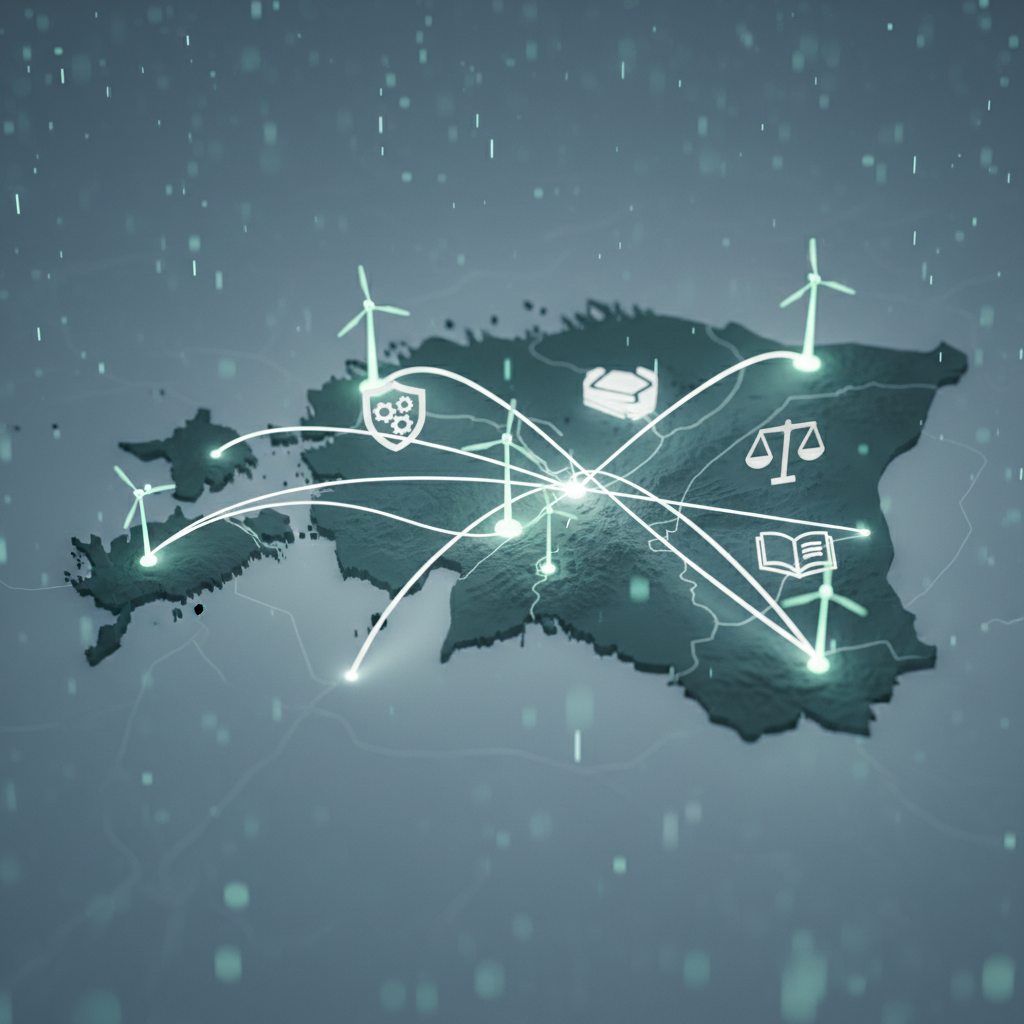
Estonian regions are undergoing significant transformation, as the spread of remote work, Rail Baltic construction, and green transition investments create new development directions beyond Tallinn and Tartu. Regions are increasingly specializing, and community-centred planning is raising quality of life across the country. Inter-regional cooperation and digital connectivity have become central drivers of regional development.
EstoniaEstonian regions have experienced profound change in recent years that extends far beyond administrative boundaries. The explosive growth of remote work, major infrastructure investments, and the pressure of Europe's green transition have together created a picture where Harju County and the capital's pull no longer define the country's development alone.
Remote work brings life back to the regions
The post-pandemic spread of remote work has proven to be one of the most important shapers of regional balance. People who previously had to choose their place of residence based on proximity to work can now prioritize quality of life, closeness to nature, lower cost of living, and their home region. This has brought young specialists back to regions that were previously at risk of population decline.
Digital connectivity has in turn become as critical an infrastructure element as the road network. Regions that have been able to invest in fast internet connections have become attractive to entrepreneurs and freelancers for whom location is secondary compared to connectivity and living environment.
Rail Baltic redraws the regional map
The most tangible change is linked to the Rail Baltic railway project, which serves as an economic backbone and transforms the accessibility of regional towns. Pärnu County and Rapla County are where the route's impact is most direct; regions are already preparing to create logistics hubs, residential areas, and business parks.
Rail connection offers the opportunity to decentralize economic activity away from Tallinn and Tartu, increase property values in areas near stations, and open access for local businesses to international markets.
Green transition opens new opportunities
Ida-Viru County, which has traditionally been Estonia's energy heartland through oil shale, is undergoing structural transition towards renewable energy and industrial innovation. Western Estonia and the islands are exceptionally promising in terms of wind energy potential, with new wind and solar parks bringing investments and jobs to the regions.
The green transition is not merely an environmentally conscious step, but also an economic guarantee; energy production gives smaller regions a steady revenue stream and infrastructural development momentum.
Regional specialization as the key to success
Estonian regions are moving from a "something for everyone" approach towards concrete specialization. Southern Estonian regions such as Tartu County and Võru County are investing in food sector technology and agrotechnology. Saare County and Hiiumaa are developing sustainable tourism and local crafts as a unique sales argument. Northern and Central Estonia maintain their industrial and manufacturing centre's role, investing in automation.
Community at the centre of planning
Regional development centres are working increasingly closely with local communities to identify genuine needs. The result is smart solutions: community centres, bicycle path networks, local food initiatives. This bottom-up planning ensures that investments are sustainable and match residents' expectations.
The administrative reform has brought municipalities into closer cooperation, which enables the planning of larger projects at regional level, reduces duplication, and allows resources to be used more efficiently.
Estonia's future is a network of regions, not solely a country of cities. Inter-regional cooperation, shared tourism routes, joint logistics platforms, joint marketing campaigns give each region the opportunity to contribute to the whole and make Estonia a model of sustainability and innovation in Europe.
Open in app →