Estonian wildflowers: how to identify them quickly in nature
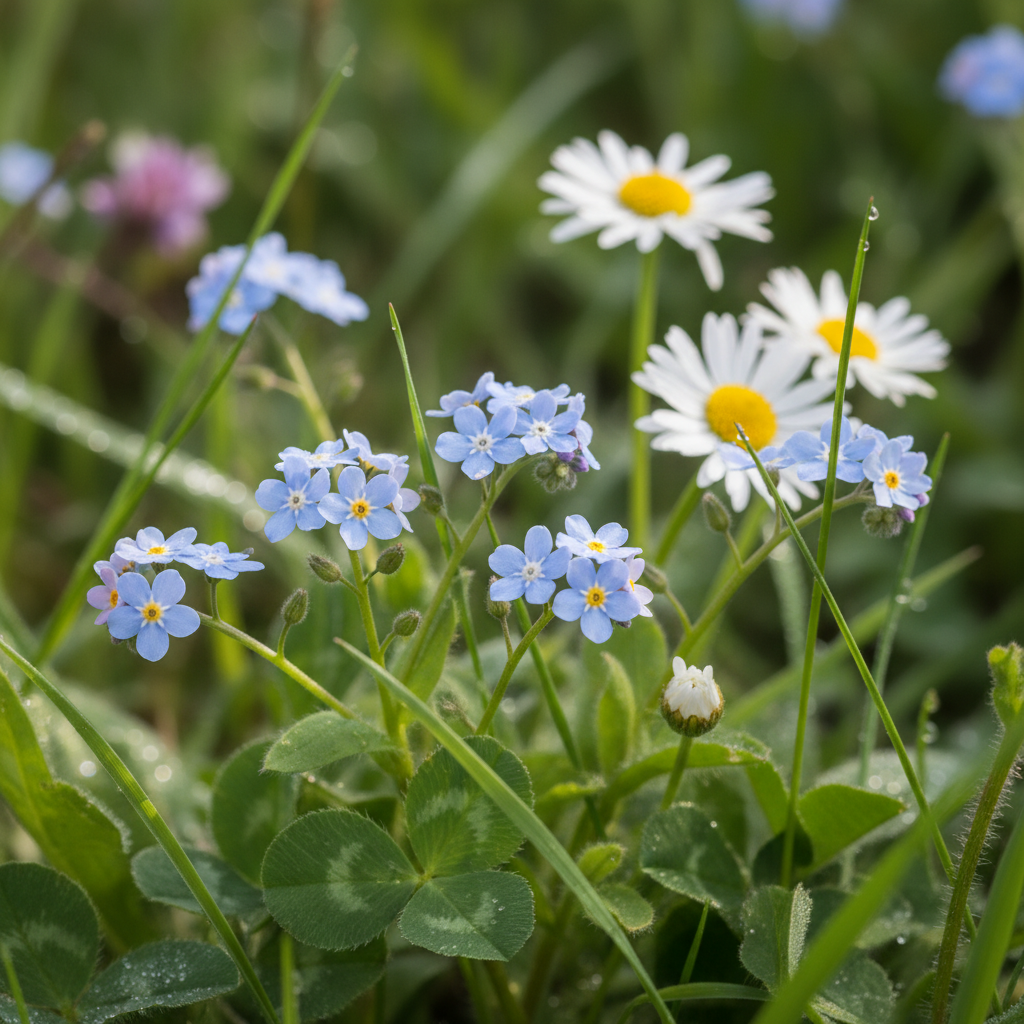
Estonia's nature offers plenty of beautiful wildflowers to spot during walks, but their names often remain confusing. Identifying plants begins by noticing habitat and growth form, then progresses to flowers, leaves, and other characteristics. Smartphone apps like PictureThis and iNaturalist make identification simple, but results should always be compared with botanical descriptions.
EstoniaEstonia's nature contains an abundance of wildflowers in dense forests, open meadows, and private gardens alike. Many of us have experienced the situation where a strikingly beautiful plant catches our eye during a walk, but its name escapes us. Knowing plants is not merely the domain of botanists; it is a skill that opens the door to a deeper relationship with the surrounding natural world.
Start with the big picture
Identifying plants begins with attentiveness. Before studying the details of leaves and flowers, it is worth viewing the plant as a whole. First, ask yourself: what is its habitat? Is the plant growing on wet boggy ground, on dry sandy heathland, or in a shady forest understory? Habitat often provides the first and most important clue about a plant's family.
The second important characteristic is growth form. Are we dealing with a low plant close to the ground, an upright stemmed flower, a climbing plant, or a tall, sturdy bushy specimen? Determining habitat and growth form narrows the range of possible species remarkably.
The flower tells a lot
The flower is the plant's most striking and specific part. Beyond colour, pay attention to the flower's symmetry and structure. Radially symmetrical flowers, such as columbine or cloudberry, can be divided into multiple similar halves through the centre point. Zygomorphic or single-plane-symmetrical flowers, such as those in the legume or mint families, can be divided into two equal halves in only one direction.
The number of petals is also important: are there five, four, or are they fused into a tube? This simple observation helps distinguish, for example, rose family flowers from cabbage family flowers. Also look at the stamens, do they protrude noticeably or are they hidden among the petals?
Leaves as helpers
When there are no flowers, leaves are the best aid. With leaves, the most important factor is their arrangement on the stem. Alternately arranged leaves grow on the stem one at a time, alternating from different sides. Opposite leaves grow in pairs, which is typical of mint family plants like nettle and mint. In whorled arrangement, three or more leaves grow from one stem node at the same time.
In addition to arrangement, look at the leaf margin: is it smooth, toothed, serrated, or deeply lobed? Many Estonian plants are unique in terms of leaf shape, the wrinkled leaves of a wrinkled-leaved plant or the coarsely serrated margin of a stinging nettle are easy-to-remember features.
Technology to aid observation in nature
Today there are excellent smartphone applications that use artificial intelligence-based image recognition to identify plants by name. PictureThis, Seek by iNaturalist, and PlantNet compare your photo to a huge database and provide a quick answer. However, one important rule applies: always check the result against the plant's other characteristics, as nature contains many similar species and lighting conditions can affect photography.
Common species in Estonia
In Estonian nature one frequently encounters a few characteristic species. Columbine can be recognized by its long-spurred flower; it often grows at forest edges and shady places, its leaves are trifoliate with long petioles. Angelica, on the other hand, is recognized by its smell: it grows on damp meadows and on the banks of water bodies, and its dense creamy-white flower clusters smell sweetly and spicily. Eyebright is a semi-parasitic plant growing on dry pine forest floors, its yellow tubular flowers arranged at the stem tip.
Responsibility when moving through nature
Studying plants carries responsibility with it. Plants should not be damaged without urgent necessity; in most cases careful observation and photographs from different angles suffice. Rare and protected plants should not be picked. It is also worth remembering that Estonia is home to a small number of plants that can cause skin irritation or are poisonous, the most well-known are giant hogweed and hemlock. A good rule of thumb: if you don't know the plant, don't touch it or eat it.
Learning to recognize plants does not happen overnight but develops through repeated observation. If you see one plant in multiple seasons, in spring when it emerges, in summer when it flowers, and in autumn when it fruits, it stays in your memory much better than merely looking at it in a picture book.
Open in app →