Estonia's anti-tank trenches smaller than Ukraine's, but experts praise them
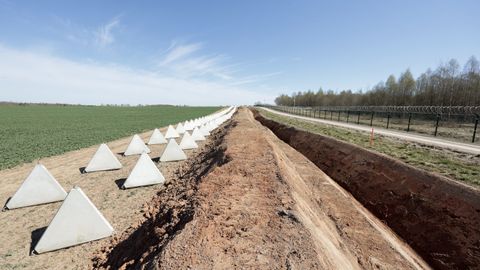
Estonia has dug ten kilometres of anti-tank trenches along its southeastern border with Russia over the past two months. Although these defences fall short of the fortifications seen near Kharkiv in Ukraine, Estonia's excavations have nonetheless received positive assessments.
EstoniaOver the past two months, Estonia's southeastern edge, facing the border with Russia, has seen the construction of some ten kilometres of anti-tank trenches. The defensive installations have drawn attention both domestically and internationally, but their scale clearly falls short of what is visible in Ukraine.
Ukraine's experience sets the benchmark
For comparison, the area around Kharkiv, Ukraine's second-largest city, is particularly instructive. Russia has attempted repeated offensives there, so far without success. The defensive lines built there are significantly more impressive in volume and extent than Estonia's current installations.
Yet this does not mean Estonia's trenches are pointless. Defence specialists have emphasised that every additional step in strengthening territorial defence creates an obstacle for an adversary, slowing a potential incursion and giving defenders valuable time to respond.
Beginning of a larger plan
Ten kilometres is only the start of a broader plan to strengthen Estonia's eastern and southeastern border defence. Experts note that anti-tank trench construction is one component of a multi-layered defence concept aimed at making Estonian territory as costly a target as possible for an adversary.
Estonia's defensive construction is taking place at a time when NATO's entire eastern flank is actively working to strengthen its defensive capabilities, drawing lessons from the course of the war in Ukraine.
Open in app →