Europe faces the question: who will fill the US humanitarian aid gap in Ukraine?
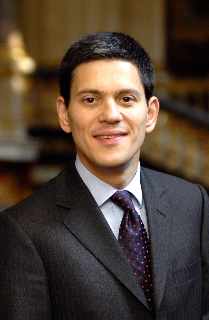
After four and a half years of war, Ukraine's physical devastation is visible to the eye, but the psychological wounds are equally serious yet harder to measure. David Miliband, head of the International Rescue Committee, emphasizes that mental health support must become central to Ukraine's recovery. Meanwhile, cuts to US humanitarian aid raise the question of whether Europe can fill this gap.
PoliticsAfter four and a half years of war in Ukraine, the country's physical destruction is painfully visible-destroyed cities, shattered infrastructure, and emptied communities. Yet the war's psychological consequences, the trauma stemming from occupation, displacement, and the loss of loved ones, are far harder to measure, though no less urgent.
David Miliband, president and chief executive of the International Rescue Committee and former UK foreign secretary, recently visited southern Ukraine and shared his observations. According to him, mental health support must become an integral part of Ukraine's recovery process, rather than remaining a side issue overshadowed by physical reconstruction.
A global pattern of civilian targeting
Miliband drew attention to a broader concerning trend: the deliberate targeting of civilians and civilian infrastructure is not limited to Ukraine alone. The same pattern is visible in Gaza, Sudan, and the Democratic Republic of the Congo. In his view, this points to a growing "new world disorder" in which respect for international humanitarian law has been seriously eroded.
At the same time, the international humanitarian aid system faces a major funding crisis. The Trump administration's decision to drastically cut US humanitarian aid has created a vacuum that someone must fill. The question of whether Europe is ready for this-in Ukraine and elsewhere in the world-has become increasingly pressing.
The shadow of Brexit's tenth anniversary
The discussion also touched on the UK's situation: this week marks ten years since the Brexit referendum. Political turbulence continues in London, and Prime Minister Keir Starmer's departure from leading the Labour Party makes normalizing EU-UK relations more complex. There is speculation about whether Manchester mayor Andy Burnham could be prepared to take EU-UK relations further than before.
The Ukraine Recovery Conference 2026 will take place in Gdańsk and serves as an important platform for discussing how to direct investment and capital into the country's reconstruction. European development institutions are seeking ways to cooperate in pursuit of sustainable economic growth, but mental health issues demand the same strategic attention as bridges and power lines.
Open in app →