First Nuclear-Clock Prototypes Complete, Surpass Conventional Atomic Clocks in Precision
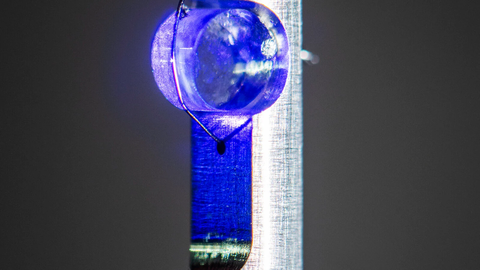
Scientists have achieved a breakthrough in developing clocks based on atomic nuclei. The new nuclear clocks use quantum oscillations of the atomic nucleus and are even more precise than conventional atomic clocks while being less sensitive to environmental conditions. The research suggests this long-standing dream may soon become reality.
TechnologyPhysicists have made a significant step forward in precision timekeeping: the first clocks based on atomic nuclei have been completed, and their accuracy markedly exceeds the capabilities of today's best atomic clocks.
Why is a nuclear clock better?
The top-tier atomic clocks in use today measure time using quantum oscillations of electrons in atoms. These are extremely precise, yet remain susceptible to external environmental interference, such as magnetic fields and temperature fluctuations. However, atomic nucleus oscillations are better protected from external influences, since the nucleus lies much deeper within the atom compared to electrons.
The nuclear clock described in the new research uses quantum oscillations of the atomic nucleus instead. This means the clock is significantly less sensitive to environmental conditions and can measure time with unprecedented precision.
Scientists' long-standing dream
The nuclear clock concept has been under discussion among physicists for years, but practical implementation has proven extremely challenging. The results of the new research show that this dream is now coming to fruition, with the first working prototypes completed and promising further development.
Such clocks could in the future find applications in navigation systems, telecommunications technology, and fundamental physics experiments, where the precision of time measurement is of critical importance.
Open in app →