From "man of the people" to tyrant: Buryatia's governor Tsydenov transformed by war
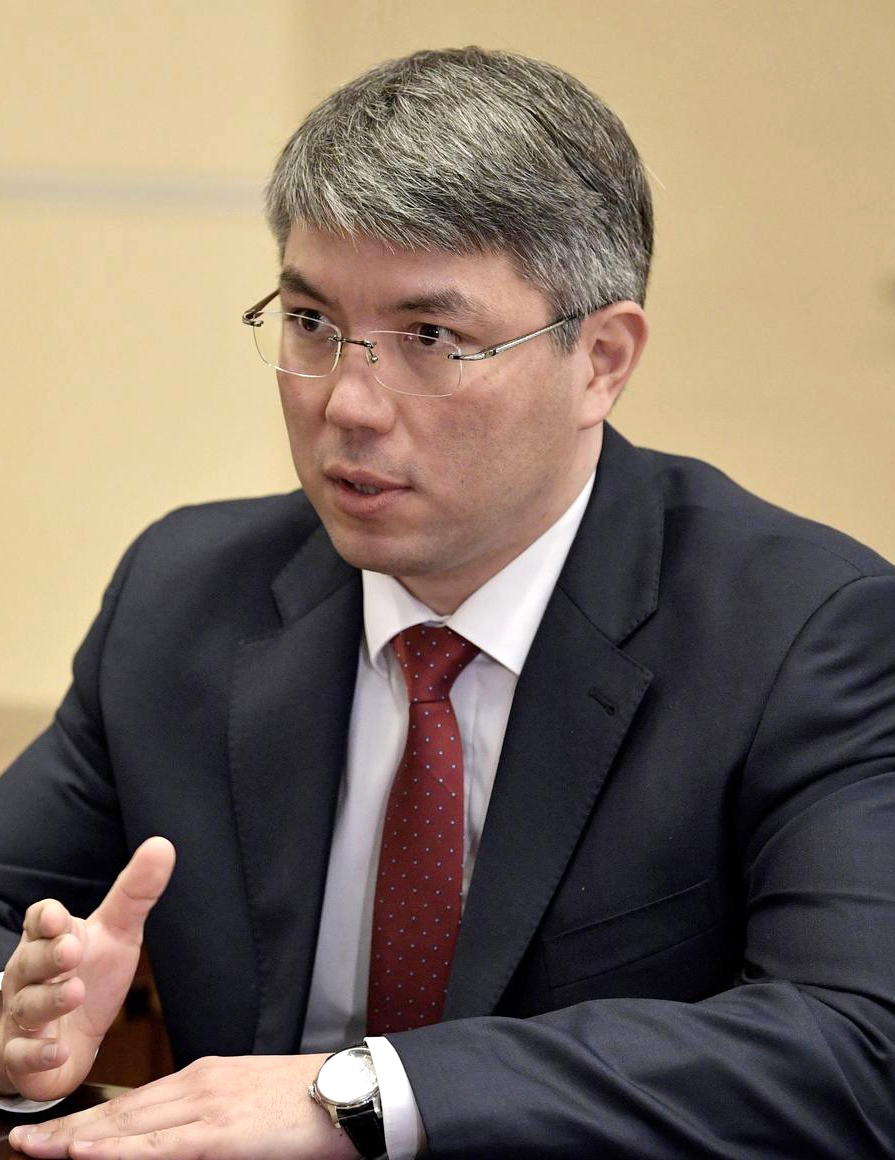
Alexei Tsydenov, governor of Russia's Republic of Buryatia since 2017, was once celebrated for his approachability and common touch, but the war in Ukraine has transformed him into an increasingly authoritarian and irritable figure. Buryatia has become one of Russia's largest suppliers of soldiers for the front, with at least 4,800 men killed, roughly 1.5% of the republic's male population of working age. An in-depth investigation by independent outlet Lyudi Baikala, republished by Meduza, traces how wartime pressure, frustrated career ambitions, and the intoxication of power have reshaped the governor.
PoliticsAlexei Tsydenov, the 50-year-old governor of Russia's Republic of Buryatia, arrived in the region in 2017 from Moscow, where he had served as deputy minister of transport. Residents remember his early years fondly: he brewed coffee for visiting journalists, posted selfies on Facebook, spoke warmly about his wife and children, and once personally called an ambulance for an epileptic stranger who collapsed in central Ulan-Ude. Today, according to sources who spoke to independent Siberian outlet Lyudi Baikala, whose investigation was republished in full by Meduza, a different man sits in the governor's chair.
A popular outsider arrives
When Vladimir Putin replaced several regional governors in 2017, Buryatia had been led for five years by Vyacheslav Nagovitsin, a Tomsk-born appointee nicknamed "Margarine" by locals for his spinelessness. The arrival of Tsydenov, who has partial Buryat heritage through his father, was greeted with something approaching collective euphoria. «The first time in the post-Soviet period, a Buryat was appointed head,» recalled journalist Evgenia Baltatarova. «We expected something incredible. The newspaper I worked for even ran a piece headlined "Buryatia is drunk on Tsydenov."»
Tsydenov quickly established a reputation for accessibility. He personally sent a helicopter to rescue the brother of journalist Baltatarova after the man broke his spine in the remote Muisky district. His aides cultivated the image of an "ordinary guy", one who would eat canteen pastries on district visits while ministers turned up their noses. Alexandra Garmazhapova, head of the Free Buryatia Foundation, recalled befriending Tsydenov on Facebook in those early days and complaining that his posts read like press-release boilerplate, whereupon he immediately sent her a selfie taken at two in the morning to prove he was a real person.
In a 2017 conversation that now reads as prophetic, Garmazhapova told the new governor: «There's a risk that, in fighting the dragon, you become the dragon yourself.» Tsydenov's reply was confident: «That won't happen to me.»
War changes everything
Since February 2022, Buryatia, one of Russia's poorest regions, located on the eastern shore of Lake Baikal, has sent a disproportionate number of men to fight in Ukraine. Sociologists calculate that a man from Buryatia is roughly 75 times more likely to die in the war than a man from Moscow. At least 4,800 people from the republic have been killed, 1.5% of the male population aged 18 to 65. In rural Dzhidinsky district, one of the poorest corners of the republic where 92% of schools are in disrepair and the average peacetime life expectancy for men is 53 years, the death rate reaches 4%.
The first night of mobilisation in September 2022 was dubbed the "St. Bartholomew's Night" by locals. Summons were delivered to villages after dark; men were given 30 minutes to pack and transported to Ulan-Ude. Fathers of many children were taken; conscription notices were reportedly issued even to the dead. Buryatia fulfilled its mobilisation quota within a week, dispatching at least 4,000 men.
Naia Arno of the Free Russia Foundation told Lyudi Baikala that Tsydenov «leapt out of his skin with Komsomol enthusiasm, sending people to war in droves», driven by a desire to stand out: «Buryatia sent the most people, we're champions in casualties, we're heroes, we're patriots, we're first.» Journalist Baltatarova offers a structural explanation: «Buryats are obliged to be more loyal than Russians in order to get any place under the sun. They have to show off ten times harder. That's why Tsydenov performs, to earn praise.»
The dragon emerges
Inside the republican government, the change in Tsydenov's behaviour is described in stark terms. «He's become irritable and inattentive, the outbursts have taken on a chronic character,» one current subordinate told Lyudi Baikala. «When it happens, half the room at meetings just sighs, well, he'll shout himself out and we'll keep working.» In late 2025 he expelled a newly appointed construction minister from a meeting for being unprepared, and a month later repeated the gesture with the acting transport minister.
Camera operator Alexander Kornilov described a recent filming session in which he suggested moving a chair so cables wouldn't appear in frame. «The governor suddenly snapped, I'll decide for myself what goes where. A cold silence settled over the studio.» The operator reflected: «Before, he was fine, because his bosses were more or less reasonable. Now his bosses have lost the plot, and he's become the same.»
Political analyst Andrei Pertsev of Meduza, who visited Buryatia in 2021, argues that Tsydenov «clearly got stuck» in the region. «He left as a young, promising deputy minister and gradually turned into an ageing regional bureaucrat.» Tsydenov had twice been passed over for the post of federal transport minister, in 2024 the job went to Kursk governor Roman Starovoyt, who later died by suicide. According to a government source, Tsydenov's mood «worsened significantly» after Starovoyt's death.
A region squeezed dry
Buryatia's economic situation has deteriorated sharply. Foot traffic in shops has fallen, enterprises are cutting staff, and the gap between rich and poor is widening. Military recruitment posters promising multi-million-ruble payouts hang in Ulan-Ude trams alongside adverts for tram drivers at 50,000 rubles a month. Government insiders told Lyudi Baikala that a 13% sequestration of the republican budget for 2026 is being actively discussed, and that state institutions have been quietly told to cut their workforce by 15% before 1 September 2026.
By 2026, the republic's open political space has «completely ceased to exist», according to human rights defender Nadezhda Nizovkina, who has herself received repeated threats. Communist Party members say not a single party initiative has reached the People's Khural's agenda in two years; a planned anti-censorship rally in April 2026 was banned by city authorities. «They tell us no without end, while police officers quietly whisper, actually we're on your side, hang in there,» laughed one Communist source.
Tsydenov's second term runs until 2027. In 2022, the People's Khural approved unlimited term limits, meaning he could run again. The governor himself has declined to comment: he did not respond to Lyudi Baikala's interview request for this investigation. «More than half of Buryatia's population would like Tsydenov to stay for a third term,» journalist Artyom Lebedev told the outlet, a claim that illustrates the paradox at the heart of the story: a leader who has, by many accounts, become the dragon he once promised never to be, may yet be asked to stay.
Open in app →