Fuel savings on the road: why truck drivers choose lower speeds
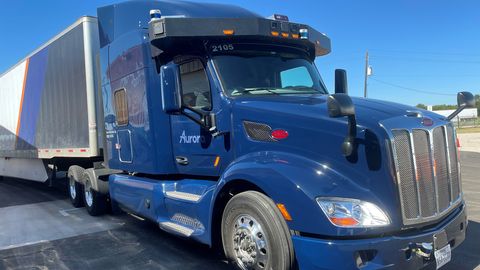
Rising fuel prices are forcing truck drivers to travel slower in order to reduce costs. This simple yet effective strategy helps hauliers survive in an era of increasingly expensive fuel. Many motorists may not understand why the lorry ahead of them is moving so slowly.
EconomyWhen fuel prices rise, experienced truck drivers respond in a straightforward way: they ease off the accelerator pedal a bit. This is not laziness or indifference — it is pure economic logic that you encounter on the road every day.
From a physics perspective, the matter is clear: air resistance increases with the square of speed. This means that driving at 80 km/h instead of 90 km/h significantly reduces fuel consumption — an estimated 10–20 percent, depending on the vehicle and load. On a ten-tonne lorry, such a difference amounts to thousands of euros a month.
Truck drivers' daily calculations
Fuel consumption is a constant concern for lorry drivers. Many operate in what is known as economy mode, where speed is kept as steady as possible and sharp acceleration is avoided. Some companies also use GPS-based tracking to monitor whether drivers are adopting a fuel-efficient driving style.
For car drivers who find slowly-moving lorries frustrating on the road, it is worth remembering: that driver is not there by accident. He knows what he is doing and factors in every litre of fuel. The cost of delivering goods depends directly on how much fuel is consumed.
Savings are passed on to prices
The impact of fuel savings is not limited to the haulage company alone. Transport costs ultimately affect the prices of all goods — from food to electronics to construction materials. So in a sense, a slower lorry is also a factor that helps stabilise consumer prices. Next time you find yourself behind a lorry on the motorway, there may be reason to think that the man at the wheel is doing his job well.
Open in app →