Giant virus found in river dissolves cell nucleus and takes over cellular control
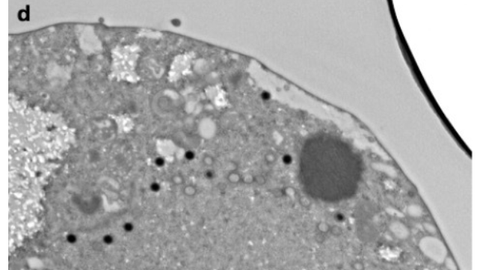
Scientists have discovered a giant virus that employs a previously unknown replication strategy, dissolving the nucleus of infected cells and taking control in its place. The discovery raises questions about how much we actually know about viral evolution. Some scientists believe such findings may help explain the emergence of complex cells.
TechnologyA giant virus discovered in a river has shaken the scientific world by employing a replication strategy never before observed: the organism dissolves the nucleus of the infected cell and takes its place, seizing complete control of the cell. The discovery has prompted virologists to question once again how much we truly understand about the world of viruses.
Unprecedented behaviour
Unlike most of its viral relatives, this organism differs significantly, and its close relatives do not behave in such a manner. With this new virus, infection is not limited to the typical takeover of cellular machinery; the complete destruction and replacement of the cell nucleus is central to the process. This makes the discovery exceptional in the entire known history of virology.
Clues to evolutionary history
According to researchers, the virus's genetic structure contains clues to a long evolutionary history of viruses. According to some scientists, such discoveries may help explain even how complex cells formed, a process that remains in many ways mysterious in biology.
Between two worlds
Scientists describe the new organism as a being that stands between two evolutionary worlds. The virus combines properties never before seen together in a single organism, and studying it may open new doors in both virology and cell biology. The discovery underscores that nature is capable of surprising us even in fields where scientists thought themselves quite well informed.
Open in app →