How Does a Radio Signal Travel from Studio to Listener's Ear?
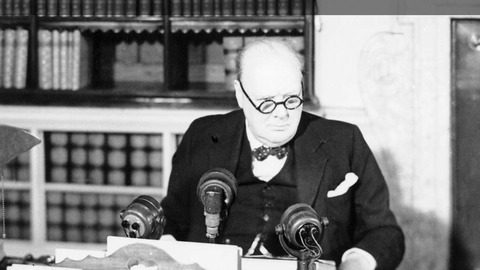
Radio seems everyday and self-evident, but in reality the sound travels a complex path through the world of electromagnetic waves before reaching the listener. The same physical laws that describe light also apply to radio waves. Over the decades, people have learned to control these waves with increasing precision and to encode information within them.
TechnologyTurning on the radio seems simple-someone speaks somewhere and you hear it. In reality, this process is far more complex and relies on the same natural laws that explain how light travels and how modern communication networks function.
Electromagnetic waves carry sound
In a radio studio, speech is first converted into an electrical signal using a microphone. This signal is then modulated onto a radio frequency wave, using either amplitude modulation (AM) or frequency modulation (FM). With AM, the wave's amplitude changes according to the sound; with FM, the wave's frequency changes. In either case, the result is an electromagnetic wave carrying sound information.
The transmitter broadcasts this wave through the air via an antenna. Electromagnetic waves travel at the speed of light, roughly 300,000 kilometres per second, and require no physical medium to propagate. This property is what makes radio waves such a powerful communication tool.
The receiver separates signal from noise
The listener's radio picks up all the surrounding electromagnetic waves with its antenna. A built-in tuned circuit adjusts the device to precisely the desired frequency, filtering out all other signals. Then demodulation occurs-the device extracts the audio information from the carrier signal and converts it back into an electrical sound wave, which the speaker finally turns into audible sound.
FM frequencies (typically in the 87.5-108 MHz range in Estonia) provide better sound quality, but their coverage area is limited. AM waves (medium wave and shortwave) can travel far beyond the horizon, bouncing off the ionosphere back to the ground.
In the digital age, technology changes but the principle remains
Digital radio technologies such as DAB+ and internet radio use the same electromagnetic waves but encode information digitally, allowing for better sound quality and less noise. The principle remains the same: the signal leaves the studio, propagates through the air as waves, and reaches the listener.
Humanity has been using radio waves for over a century, and by now they are woven into nearly every communication network, from Wi-Fi and mobile networks to space communications and radar. So turning on the radio is a small window into one of physics' most elegant phenomena.
Open in app →