Israeli discovery reveals 780,000-year-old campfire sites
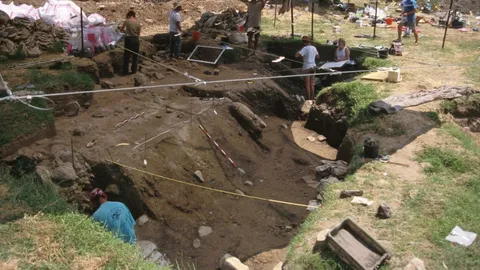
A new scientific study opens a rare window into the history of early human fire use. Charcoal remains from the prehistoric site of Gesher Benot Ya'aqov in northern Israel provide evidence that our distant ancestors not only used fire around 780,000 years ago, but were also able to select settlement locations where fuel was continuously available.
TechnologyDiscoveries made at the prehistoric site of Gesher Benot Ya'aqov (GBY) in northern Israel have provided scientists with an unprecedented view into the daily lives of early humans around 780,000 years ago. The recently published study is based on charcoal fragments found there, which provide evidence of ancient fire use.
Charcoal tells an ancient story
Analysis of the site shows that the people of that time, our distant ancestors, not only knew how to use fire, but also possessed the skill to strategically choose settlement locations. The area surrounding the site had a continuous supply of fuel, suggesting that early humans understood their environment and planned their activities in advance.
What does this discovery mean?
The study makes an important contribution to the scientific debate about when and how humanity began controlling fire. The Gesher Benot Ya'aqov site in Israel has previously yielded substantial evidence of ancient life, but this study adds an entirely new layer to our understanding of early humans' cognitive development, their ability to think about resource availability, and their choice of living environment.
Open in app →