"Luck 13": Estonian Television's Silent Common Ground
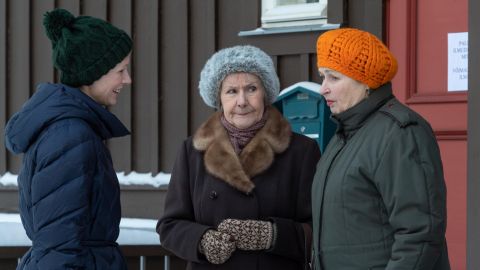
"Luck 13" has been an integral part of Estonian viewers' daily lives for over three decades. The series operates at a foundational level of popular culture; even those who don't consider themselves fans know its characters and their stories. Current screenwriter Andra Teede has noted that young people watch it with a hangover.
Culture"Luck 13" is Estonia's longest-running television series, having remained in the hearts of viewers for more than three decades. The first episode aired on 30 October 1993, and by now the series has become something more than just a television programme-it is a cultural phenomenon that lives on even in the consciousness of those who do not watch it consistently.
Women as Engines, Men as Thinkers
From the early days of the series, it is striking that women-Mare, Alma, Are, Jane, Annemai (Garmen Tabor) and others-are the ones who drive things forward and keep life's wheel turning. Men tend to have a more philosophical role: to lament, to reflect, and to share life's wisdom. The series' first director Tõnis Kask has spoken of the importance of elderly men's philosophy in the context of this series; this slow and calm approach to life is one of "Luck 13"'s hallmarks.
Screenwriter Andra Teede, who has been writing the series since autumn 2014, has noted that younger people like to watch "Luck 13" with a hangover. This is hardly surprising-the series possesses a narcotic tranquillity, where time flows at its own pace, without haste or tension. A similar effect has been noted with the 1990s British children's series "Teletubbies", which was considered the favourite of quite a different audience at the time.
Camp Aesthetic and Facebook Groups
The series has its own camp dimension, underscored by an active Facebook community where stills and frames are shared out of context. Placed out of context, or rather into new, denser contexts, these moments become particularly funny and peculiar. The symbols and repeated scenes of "Luck 13" have taken on a life of their own, outside the television screen.
This is a mark of true popular culture: the series operates at an infrastructural level, where it goes unnoticed. Like a hit song that is not known by name, yet is equally familiar as it floats past one's ears on a bus, in a taxi, or in a shopping centre. "Luck 13" is that shared thing, that common ground in Estonian television.
Three Decades, Many Hands at the Wheel
The series' history is long and intergenerational. The original creator and first screenwriter was Astrid Reinla, followed by Kati Murutar. From 1996 onwards, Teet Kallas wrote the scripts, later alternating with Urmas Lennuk and finally Andra Teede. The directorship changed in 2003, when Ain Prosa took over from Tõnis Kask, a role he continues to hold to this day. Since 1997, Balti Video (BEC) has been the series' co-producer.
The minced meat casserole, which in the series' first episode sparks both debate and hunger, is like a symbol for the entire series itself: simple, homely, and somewhat complex all at once.
Open in app →