Manor Meditations: How Estonian Ruins Speak to Our Past
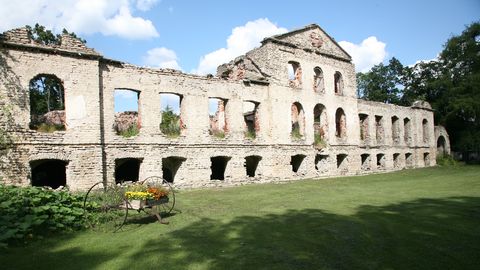
Juhan Maiste, professor emeritus at the University of Tartu, reflects on manors, castles, and abandoned parks as historical questions. Ruins are not merely traces of lost worlds, but living witnesses to places of memory. Time treads upon moss-covered stones, sometimes mourning, sometimes dreaming.
CultureOld manors and castles stand across Estonia's landscape as silent witnesses, moss-covered walls that carry far more than mere architecture. Juhan Maiste, professor emeritus at the University of Tartu, invites us to look beyond these stones and ask what history truly wants from us.
Manors are not simply gravestones of a lost world of nobility. They are places where the past has not truly disappeared-it lives on between broken vaults, alongside overgrown garden walls and along the edges of decaying park ponds. According to Maiste, ruins are a kind of question that history poses to us, and answering it requires patience and an open heart.
Memory and Contemplation in Space
An abandoned park or a castle crumbling into fragments is no neutral space. There meet feelings of grief and longing, those who have gone and those yet to come. Such places call upon us to pause, to breathe, and to listen to something that everyday life usually drowns out.
The valorization of places of memory has become increasingly relevant in Estonia. On one hand, various restoration projects are underway that seek to breathe new life into ruins. On the other, there is growing interest in the spiritual dimension of these spaces, the question of what it means to live in a landscape so richly saturated with history.
Professor Maiste's reflections remind us that cultural heritage is not merely an artifact preserved behind museum glass. It is a living dialogue between past and present, in which every step along a stone path carries its own significance.
Open in app →