Marika Laurik: Parliamentary immunity is not fulfilling its true purpose
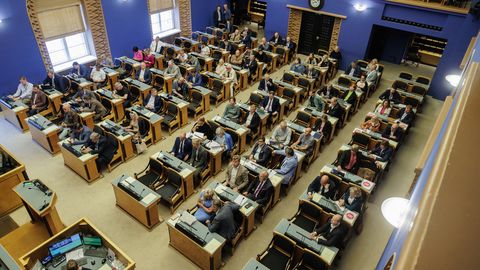
Riigikogu member Marika Laurik argues that parliamentary immunity should protect elected representatives from politically motivated criminal proceedings. In her view, it should ensure a balance between executive and legislative power, but not allow anyone to escape punishment.
OpinionMarika Laurik (EERK) raises an important constitutional question: is Estonia's parliamentary immunity system functioning as it should?
The principle of parliamentary immunity is a cornerstone of democratic governance. Its main purpose is to ensure that the executive power, particularly the prosecutor's office and police, cannot use criminal proceedings to exert political pressure on Riigikogu members. This protective mechanism is important precisely because the legislative power must be able to fulfil its duties independently.
Protection, not privilege
According to Laurik, it is essential to distinguish between two things: protection from politically motivated proceedings on the one hand, and the ability to escape punishment on the other. Parliamentary immunity must not become an instrument through which elected representatives avoid accountability for actual violations of law.
Ideally, the system should work in such a way that unfounded proceedings are never initiated in the first place, but in cases of genuine crimes, justice can still be administered without obstacles. The current situation, however, raises the question of whether the mechanism is sufficiently clear and effective to distinguish between these two scenarios.
The balance of powers is at stake
The topic of parliamentary immunity is particularly topical when considering that the Riigikogu as an institution must be able to fulfil its legislative role without external pressure. At the same time, in a democratic society, there must not be a principle that certain offices automatically come with immunity from punishment for actions that would bring accountability to ordinary citizens.
Laurik's opinion calls for an analysis of whether current regulation achieves this delicate balance and whether, if necessary, the system should be reformed.
Open in app →