Mattias Jõesaar: British PM finally overcame shame, England flag was raised
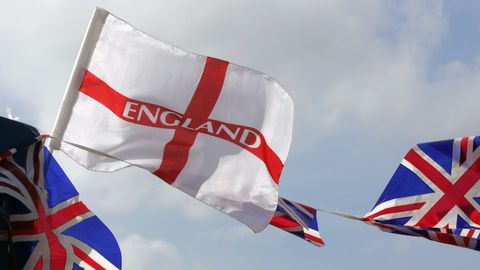
On Wednesday evening, England's football team will face the Democratic Republic of Congo in the round of 16 of the 2026 World Cup. Before the match, British media reported a political stir: the decision was finally made to raise the St George's Cross flag at the flagpole of the Prime Minister's residence. Opinion editor Mattias Jõesaar writes that the incident is a cautionary example of how handling national symbols can become a political issue.
OpinionEngland's football team will take the field on 30 June 2026 in the round of 16 of the World Cup against the Democratic Republic of Congo. But before that match, a quite different football-related story reached the political pages in Britain.
British media reported that at the flagpole of 10 Downing Street, the official residence of the Prime Minister, the decision was finally made to raise the England flag, Saint George's Cross. At first glance, a trivial detail, but this decision provoked a surprisingly fierce reaction in the country.
The flag as a political symbol
Mattias Jõesaar, opinion editor at Reflect.ee, highlights this incident as a striking example of how national symbols are never truly neutral. The St George's Cross has been controversial for years, with some associating it with nationalism, others viewing it purely as enthusiasm by football fans. The Prime Minister's decision to raise the flag thus represented a public statement.
The fact that this became news speaks volumes in itself. When raising a flag becomes a political act, the country has a problem around its symbols that cannot be ignored.
A lesson for Estonia and others
The incident in London offers a broader lesson: national symbols require clear and consistent treatment, otherwise political squabbles fill the void. When officials hesitate over whether to use their country's or region's symbols, they signal something that reaches far beyond football.
Open in app →