Michal: I'm completely confident in my team, there is no minority government
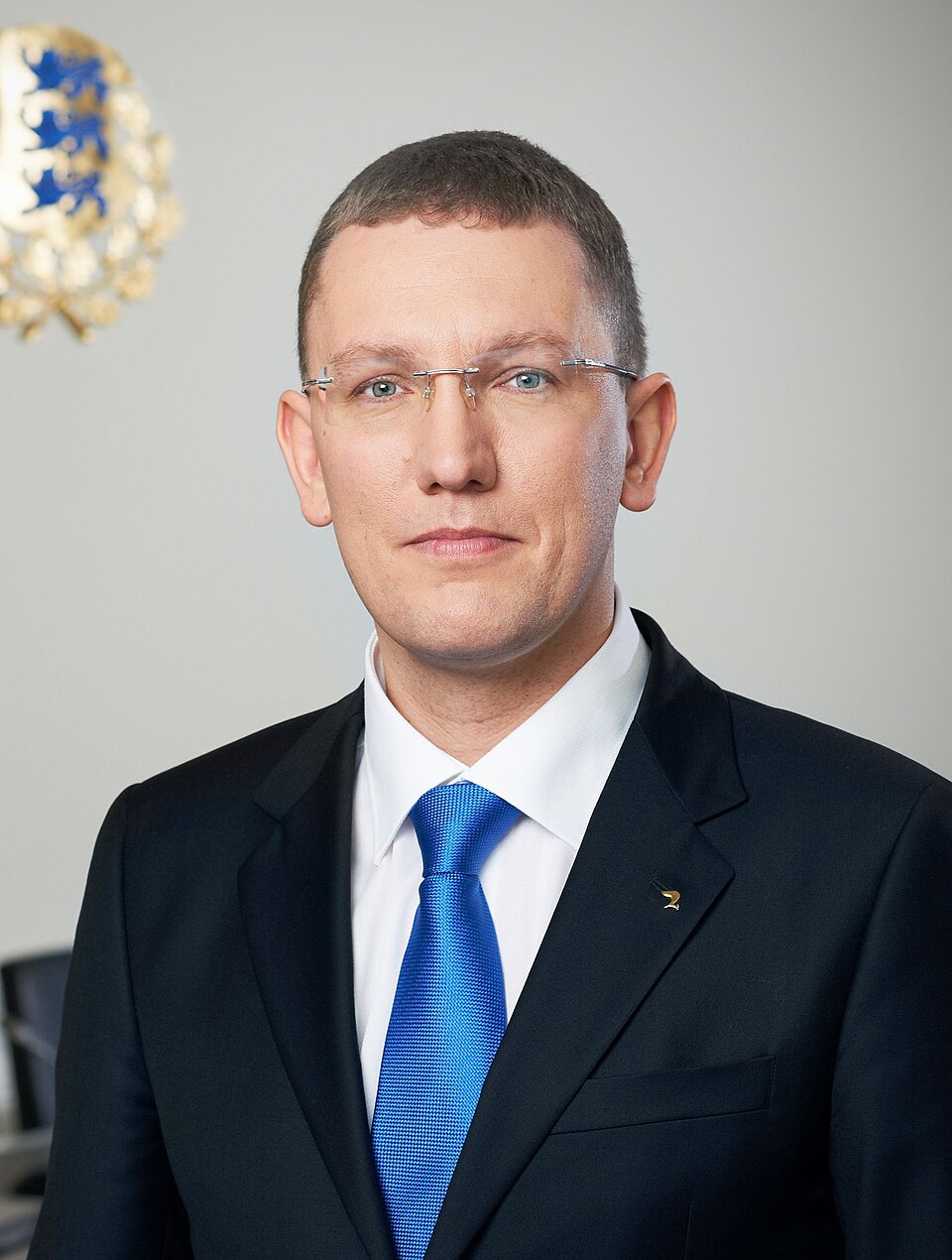
Prime Minister Kristen Michal confirmed on Vikerradio that the Reform Party and Estonia 200 coalition remains intact and claims of government collapse are political spin. Michal acknowledged that higher education needs additional funding and highlighted an important goal to allow the second pillar of pensions to be used as collateral for home loans.
EstoniaPrime Minister Kristen Michal firmly rejected claims on Monday in Vikerradio's "Prime Minister in Studio" that the Reform Party and Estonia 200 coalition is in danger of collapse. Hosts Mirko Ojakivi and Arp Müller asked Michal directly whether Estonia is effectively under a minority government following the vote of two former finance ministers.
"Can the answer be very simple: no!" replied Michal.
The voting incident in the finance committee
The question arose because on Monday, Aivar Sõerd and Mart Võrklaev, former finance ministers from the Reform Party, did not support this year's supplementary budget in the Riigikogu finance committee. According to Michal, his party colleagues want a larger budget adjustment than the current supplementary budget provides. However, he emphasised that major changes and cuts will be made through the main budget and the state budget strategy (RES), which will be drawn up in summer. The supplementary budget is, in his view, of negligible size in terms of the state's finances.
"When we draw up the budget in autumn, we will have their support. They have probably already indicated themselves that they have no intention whatsoever of breaking up the coalition," added Michal.
When asked about speculation that several coalition MPs have already arranged to switch parties, Michal said such talk has been circulating since at least the end of 2023. "This spin goes around more than anything else in Estonia. So let it go around, but people will get tired of hearing that everything will fall apart," he said.
Bank tax, car tax and ETS 2
On the car tax issue, Michal explained that every euro collected as car tax goes into road construction over four years, totalling 380 million euros. He added that the current tax rate of approximately 35 per cent is optimal and cancelling one tax would require finding money elsewhere.
When the hosts asked about the bank tax, Michal responded with a sharp example: "Does anyone think there are some imaginary bank taxes that banks or bankers pay? All of that is taken from us as clients."
On the EU's emissions trading system ETS 2, Michal repeated his previous position that implementation should be postponed and ideally cancelled, as the resulting bureaucracy is too great.
Second pillar as collateral for home loans
As one of the more important goals the current government wants to accomplish during its tenure, Michal named the use of the second pillar of pensions as collateral when buying a home. "The bill on using the second pillar as collateral for housing could be submitted during this government's term and hopefully be debated in autumn," he said.
On higher education funding, Michal acknowledged that universities have requested additional money because more young people will arrive there in the coming years. He considered it a reasonable principle to prefer directing money to higher education rather than capital expenditure, but stressed that savings would need to be found elsewhere for this.
Rail Baltic and Latvia's delays
At the end of the broadcast, the situation with Rail Baltic was discussed, where Latvia's construction work has been delayed. Michal stressed that all three Baltic states must fulfil their part on time. He did not consider it likely that Latvia would abandon railway construction altogether, as this would require returning all the money received from the European Union.
Open in app →