Midsummer Romance: How Hearts Raced Long Before Tinder
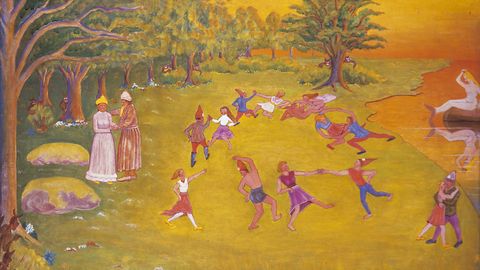
Midsummer is one of Estonia's most enigmatic holidays, steeped in centuries-old folk tradition surrounding love, magic, and ancient fertility rituals. White nights, bonfires, and the legend of the fern flower have created a mystical atmosphere where ordinary boundaries seem to dissolve. Yet the most famous stories connected to midsummer may not mean what we interpret from them today.
CultureEvery June, as the month draws to a close, Estonia fills with the scent of bonfire smoke, the sound of folk songs, and a mystical white night that refuses to turn dark. Midsummer is not merely a summer celebration-it is one of our most enigmatic folk holidays, into which centuries have layered love magic, courtship customs, and fertility rituals.
The Voice of the Heart Before the Smartphone
Today we search for a life partner using apps and algorithms, but just a generation or two ago, midsummer night was the moment when young people could listen to their hearts despite society's stricter social order. According to folk tradition, ordinary boundaries dissolved on midsummer night-both social ones and perhaps even those separating the visible world from the invisible.
Love magic held an important place at midsummer. Girls would braid flower wreaths and set them adrift on water; whichever boy's wreath the girl's wreath drifted toward, that boy had won her heart. Flowers, dewdrops, and the tranquility of the night carried prophetic power in which people believed with complete seriousness.
The Fern Flower and Hidden Meanings
The most famous midsummer legend is the fern flower, a plant that blooms only on midsummer night and brings the finder good fortune, wealth, and love. Botanically, the fern is a plant that reproduces by spores and does not produce flowers. Yet this legend has survived centuries, because behind it lies something more than a simple hope of finding a rare bloom.
According to folklorists, the search for the fern flower itself symbolized a journey. Young people would venture into the forest together on midsummer night, search and wander, and it was this shared adventure that drew hearts together. The legend was an excuse; the ritual was real.
What Does Folk Tradition Actually Tell Us?
It is important to note that the modern conception of midsummer as unbounded freedom is partly myth. The old customs were actually quite rigidly structured-courtships proceeded according to set rules, young people's gatherings took place under the community's watchful eye, and in most cases with family approval.
Yet folk tradition testifies to the fact that people have always sought ways to express natural feelings. Midsummer offered a certain ritualistic space, a moment when society's rigid order stepped back and the celebration of nature's cycle took center stage.
Today we have preserved the form of midsummer romance-the bonfires, the songs, the white nights-but its deeper meaning has become somewhat obscured. Midsummer night has set hearts racing, no matter which century we are speaking of.
Open in app →