NASA JPL Tests New Electromagnetic Thruster for Mars Missions
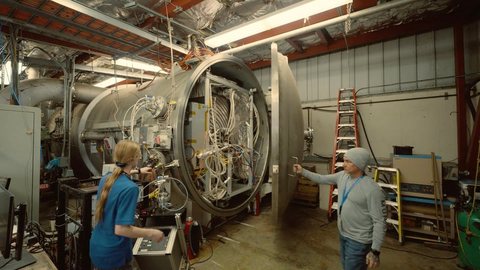
NASA's Jet Propulsion Laboratory tested an electromagnetic thruster powered by lithium vapor in Southern California. The motor surpassed all previous tests conducted in the United States and could potentially enable future human missions to Mars or allow robotic rovers to operate across the entire solar system.
TechnologyNASA's Jet Propulsion Laboratory (JPL) in Southern California tested a new electromagnetic thruster powered by lithium vapor on 24 February 2026, with results that exceeded all previous tests conducted in the United States.
Unprecedented Power Output
The laboratory team activated the engine, whose thrust measurements significantly surpassed those of previous US tests. Lithium vapour serves as the propellant in this system, accelerated by an electromagnetic field as it is expelled, generating extraordinary force.
The Road to Mars and Beyond
The new technology is considered promising in several areas: it could carry crewed missions to Mars and enable robotic rovers to operate across the entire solar system. Such an engine would provide spacecraft with considerably more efficient propulsion than traditional chemical-fuel rockets, as electric propulsion systems are generally more efficient over long distances.
Open in app →