NASA Plans Nuclear-Powered 'Space Railway' to Mars and Beyond
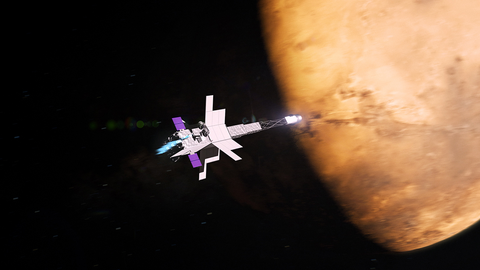
NASA is developing an ambitious plan combining nuclear-powered spacecraft and autonomous flying robots, aiming to reach Mars and explore deeper regions of the solar system. The agency is returning to nuclear propulsion technology abandoned decades ago, integrating it with modern solutions.
TechnologyNASA is working on a new vision to revolutionize space travel, based on nuclear-powered spacecraft and autonomous flying robots. The plan encompasses missions to Mars, the Moon, and more distant regions of the solar system.
Old idea, new life
The agency is returning to nuclear propulsion technology that has not been seriously tested for decades. A reactor-powered spacecraft would allow spaceships to travel significantly faster than current chemical rocket-powered rockets, notably shortening the time required to reach Mars.
This so-called space railway concept combines two approaches: nuclear-electric propulsion provides continuous thrust for long space missions, while flying robots could operate at the forefront, mapping and exploring targets before human arrival.
Why now?
According to experts, the rediscovery of nuclear propulsion is driven by several factors. Private sector nuclear reactor technology has made a significant leap in recent years, making smaller and lighter reactors a realistic possibility. Additionally, NASA's goals are more ambitious; sending humans to Mars requires solutions that chemical propulsion simply cannot provide.
NASA's vision shows that the next major step in space exploration may not come from crewed flight or landers, but rather from strong propulsion technology and intelligent robot collaboration. If the plans materialize, it could fundamentally change how humanity explores the solar system in the future.
Open in app →