New Manhattan skyscraper blocks iconic Empire State Building view on Fifth Avenue
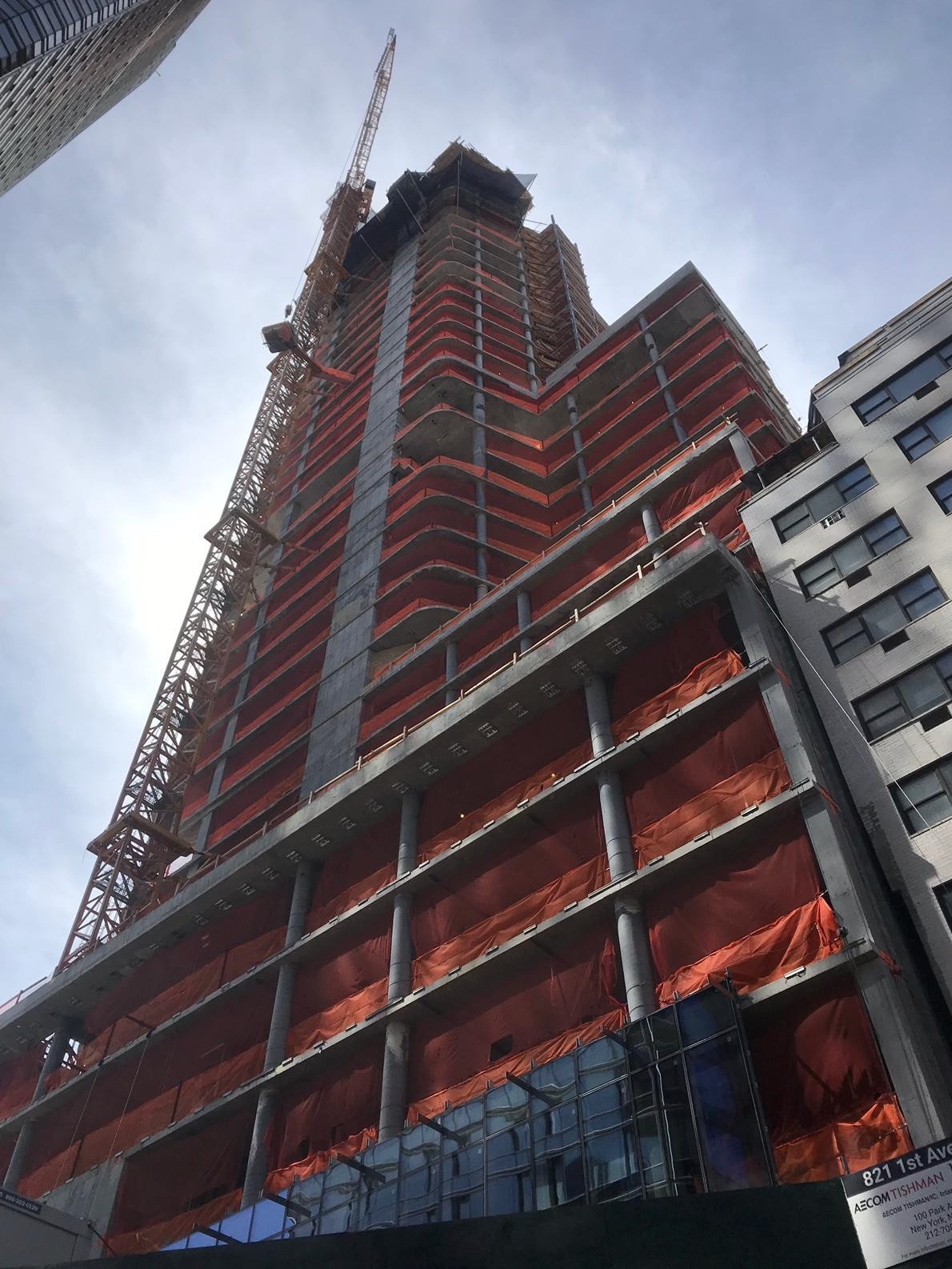
A new ultra-thin skyscraper at 262 Fifth Avenue in New York City has permanently blocked what was long considered the best ground-level view of the Empire State Building. Designed by Moscow-based architecture firm Meganom, the first Russian-designed building on Manhattan, the tower has sparked a wave of public fury. Apartments start at $7.5 million, with the building seen by critics as yet another symbol of inequality in a city gripped by a housing crisis.
CultureA newly completed ultra-thin residential skyscraper at 262 Fifth Avenue in Manhattan, New York City, has triggered an unusual wave of public anger, not just for what it looks like, but for what it has taken away: the beloved ground-level view of the Empire State Building from Madison Square Park.
A Russian First on Manhattan
The 56-storey tower was designed by Yuri Grigoryan and his Moscow-based architectural studio Meganom, making it the first building on Manhattan conceived by a Russian architecture firm. The project was commissioned by developer Boris Kuzinets, a Riga-born businessman who emigrated to Israel in the 1970s, later returned to the Soviet Union during perestroika, and eventually settled in Moscow where he made his fortune in real estate development.
Kuzinets and Grigoryan had previously collaborated in Moscow, where Meganom designed a residential complex for Kuzinets on Molochny Lane. The developer later fled Russia after what Grigoryan described as a serious attempt to seize his business, an ordeal that reportedly led to a heart attack. Kuzinets subsequently founded Five Points Development Group in New York and spent years acquiring three adjacent plots along Fifth Avenue, just north of Madison Square Park.
The project, first commissioned in 2016, was repeatedly delayed and revised. Meganom handled the architecture, while New York-based SLCE Architects adapted the design to local building codes, and Copenhagen studio Norm Architects designed the interiors. Apartments went on sale in May 2025.
The "Pencil Tower" Controversy
262 Fifth Avenue belongs to a growing class of so-called "pencil" or ultra-thin skyscrapers, buildings with an extreme ratio of height to base width. New York has seen dozens of such towers rise since the 2008 financial crisis, when luxury real estate became a global store of wealth for the ultra-rich.
The building contains just 26 apartments across 56 floors. Prices begin at $7.5 million for standard units, with duplex apartments averaging around 300 square metres starting at $18 million, and at least one four-level penthouse at the top. As is typical for this type of development, the identities of buyers are concealed behind shell companies.
Meganom employed several unconventional engineering solutions. The building's load-bearing core, which also houses the elevators and staircases, has been moved to the exterior, freeing the interiors of columns and allowing for full floor-to-ceiling panoramic glazing six metres high, with each pane weighing approximately three tonnes. The 41st floor is left open to reduce wind pressure, and a nearly 300-tonne pendulum damper at the top absorbs oscillations. The tower is crowned with a sweeping canopy of curved metal panels, a nod to the ornate spires of historic Manhattan skyscrapers, beneath which sits an infinity pool reserved for the penthouse residents.
"A Yacht Moored on Land"
New Yorkers began expressing their hostility toward the project long before it was finished. An Instagram account dedicated to collective outrage, "fu2625thave", was created and later deleted, but videos and posts tagged with a similar hashtag have continued to circulate, including on the Facebook page of the account's founder, left-wing activist Lark Phillips. One video explaining how the tower had destroyed the classic view of the Empire State Building from Madison Square Park accumulated more than six million views.
The view that has now been blocked was long considered the finest ground-level angle on the Empire State Building in all of Manhattan, a vista that allowed the iconic skyscraper to be seen in its full vertical sweep. Now, standing in Madison Square Park, only 262 Fifth Avenue is visible, even though it is shorter than the Empire State Building itself.
Critics and residents frame the tower as a symbol of broader inequality. The New York Times has called it another «anorexic supertall for billionaires». David Madden, a sociology professor at the London School of Economics and a former New York resident, described ultra-thin skyscrapers to the Financial Times in stark terms: «The first thing to understand is that this is not housing. It has no social mission. It is a luxury object, a yacht moored on land.»
New York Mayor Zohran Mamdani, a self-described socialist who took office on 1 January 2026 on a platform that included tackling the city's affordable housing crisis, has not commented directly on the Meganom project, but has repeatedly criticised the broader proliferation of elite towers.
A City That Always Changes
The controversy around 262 Fifth Avenue feeds into a wider debate about New York's zoning laws, which date to 1961 and allow for the sale of so-called «air rights», the empty space above a given plot of land. This mechanism has long enabled developers to build higher than standard regulations would otherwise permit. Donald Trump, for instance, paid $5 million in the 1970s for air rights above the historic Tiffany building on Fifth Avenue, enabling Trump Tower to rise 20 floors beyond what zoning alone would have allowed.
Some critics have called for New York to adopt formal «view corridor» protections, legislation shielding certain iconic sightlines from development, as cities like London, Rome, and St Petersburg have done. But architecture critic Michael Kimmelman, writing in The New York Times, noted that Manhattan's rigid grid of streets makes such protections particularly difficult to implement, and that truly complete views of historic skyscrapers are rare in the city to begin with.
Defenders of change point out that the Empire State Building itself was once the subject of identical fury, denounced as a symbol of «the triumph of greed» when it replaced the original Waldorf-Astoria Hotel. Over time, New Yorkers came to love it. Whether 262 Fifth Avenue will enjoy the same rehabilitation remains to be seen.
Open in app →