New State Defence Law Treats Estonia's Private Media as Suspect, Not Partner
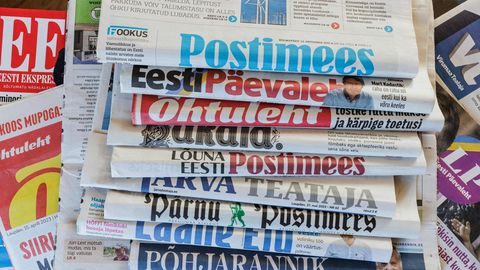
Journalist Priit Hõbemägi criticises the crisis management and state defence law recently passed by the Riigikogu, which expands authorities' powers to shut down and censor news outlets. Two years of negotiations between media companies and the State Chancellery proved fruitless. The Estonian Media Association was not involved in drafting the law even once.
OpinionEstonia's major media companies spent two years in negotiations with the State Chancellery, developing a cooperation framework for crisis situations. Yet when the Riigikogu recently passed the crisis management and state defence law, it became clear that all this work had been in vain – the final legislation contains not a word about cooperation with media.
Even more concerning is that the new law is moving in the opposite direction. Instead of recognising private media as a vital partner in times of crisis, the circle of authorities with the power to order the closure of news outlets, censor their content, or entirely halt media companies' operations has been expanded. Journalist Priit Hõbemägi points out that such an approach reflects a fundamental distrust of free journalism.
Media Association Left Out
Particularly striking is the procedural problem: the Estonian Media Association, which represents the country's largest media companies, was not involved in drafting the law a single time. This means that when shaping legislation with serious implications for journalism, the sector's principal representatives were entirely excluded from the process.
In democratic societies, independent journalism is considered vital during crises – precisely when people need reliable information the most. Expanding powers of mandatory closure and censorship, however, calls this principle into question. The issue is not whether the state should have some regulatory role in the information environment, but whether the solution adopted is proportionate and consistent with democratic values.
Trust as the Foundation for Crisis Response
According to Hõbemägi, the case reflects a broader concern: the codification of crisis preparedness is being done in a way that ignores the media sector's actual role. Effective cooperation between the state and journalism requires mutual trust – trust that the current law rather undermines than strengthens. Estonia's media companies now have reason to ask whether they are seen as partners of the state or as potential sources of threat.
Open in app →