Opinion: Estonia plans to restrict public access to beneficial ownership data
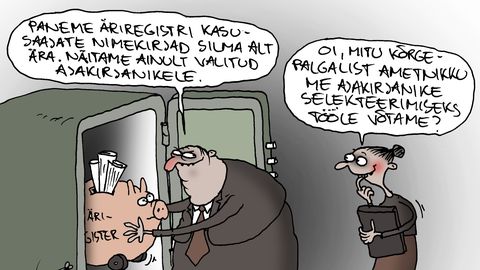
The Estonian state is considering restricting public access to beneficial ownership information in the business register. Under the proposed system, journalists would need to apply to the Ministry of Finance to view who actually owns companies. Critics warn this would undermine press freedom and financial transparency.
OpinionEstonia is considering a move that would fundamentally change how journalists and the public can access information about who really owns businesses registered in the country. According to information currently being discussed at the Ministry of Finance, future access to beneficial ownership data in the business register could require journalists to submit a formal application, after which ministry officials would decide whether the applicant qualifies sufficiently as a journalist.
A Gatekeeper for Public Information
This proposal raises an obvious and troubling question: who decides who counts as a journalist? In an era of independent media, bloggers, and investigative platforms operating outside traditional newsrooms, drawing such a line is inherently political. Handing that power to ministry bureaucrats creates a conflict of interest that should alarm anyone who values accountability journalism.
Beneficial ownership data, information about who ultimately controls and profits from a company, is one of the most powerful tools available for exposing corruption, tax evasion, and money laundering. The European Union has repeatedly pushed member states to make this information more accessible, not less. Estonia positioning itself to move in the opposite direction would be a significant step backwards.
Transparency Under Threat
The practical consequences of such a restriction are easy to imagine. A journalist investigating a politically sensitive company would need to first reveal their inquiry to the very authorities that might have an interest in suppressing it. Applications could be delayed, denied, or used to tip off the subjects of investigation. Even where officials act in good faith, the chilling effect on investigative reporting would be real.
Estonia has built a strong international reputation as a digitally advanced, transparent, and trustworthy state. Restricting access to beneficial ownership information on the basis of bureaucratic discretion would damage that reputation, and, more importantly, would make it harder to hold economic power to account. The proposal deserves serious public scrutiny before it goes any further.
Open in app →