Paleontologists: 250-million-year-old fossil proves that mammal ancestors laid eggs
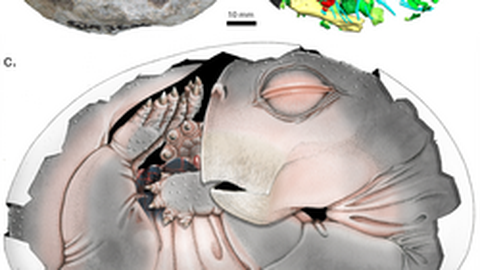
Scientists have discovered a rare 250-million-year-old fossil that is the first direct evidence that mammal ancestors laid eggs. This finding illuminates survival strategies that helped these animals dominate after a mass extinction, and may provide crucial information about species' adaptive capacity in the context of today's climate change.
TechnologyPaleontologists have made a breakthrough discovery: a 250-million-year-old fossil has provided direct evidence for the first time that mammal ancestors laid eggs. The find has been called extraordinary in the scientific community, as it has previously been only a theoretical assumption.
A rare fossil, great significance
The fossil dates from a period when the Earth experienced one of history's most devastating extinction events. According to scientists, egg-laying was precisely the survival strategy that allowed the mammal ancestors' group, known as synapsids, to survive the catastrophe and become the dominant animal group in the post-extinction ecosystem.
Egg-laying reproductive strategies are evolutionarily more flexible under certain conditions: eggs are more resource-efficient and can be placed in suitable locations depending on environmental circumstances. This would have given ancient mammal ancestors a crucial advantage under conditions of food scarcity and unstable climate.
Connection to today's climate change
Scientists emphasize that the find is not merely a palaeontological curiosity. Information from the study about species' survival strategies in extreme environmental conditions may provide valuable insight into how present-day species respond to climate change. Historical precedents help us understand which biological mechanisms are most effective in critical situations.
This discovery significantly enhances our understanding of the evolutionary history of mammals and opens new avenues of research in both palaeontology and ecology.
Open in app →