Pula, Croatia: Europe's Ancient Pearl Without the Tourist Crowds
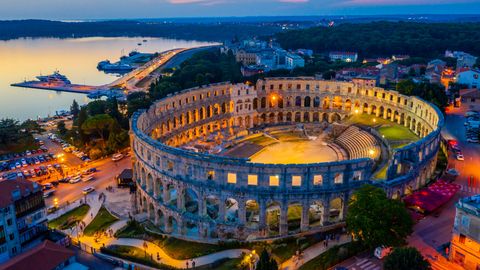
The largest city on Croatia's Istrian Peninsula, Pula offers Roman imperial heritage without the tourist masses of Dubrovnik and Split. The city in the northern Adriatic Sea is a hidden ancient treasure that most travellers are only just discovering.
CulturePula, located on Croatia's Istrian Peninsula, is one of Europe's best-preserved ancient towns, yet it remains largely unknown to most tourists. While Rome's Colosseum attracts millions of visitors annually, Pula's amphitheatre-one of only six fully intact Roman amphitheatres in the world-offers the same breathtaking experience in a much more peaceful atmosphere.
Pula sits on the northern shore of the Adriatic Sea and differs fundamentally from Dubrovnik and Split, where narrow streets tend to become packed with visitors during the summer season. In Pula, you can study Roman-era structures up close without queues and the discomforts that come with mass tourism. The city's amphitheatre can accommodate nearly 20,000 spectators and was built sometime during the first century after Christ.
More Than Just an Amphitheatre
Pula's old town is filled with other Roman heritage: triumphal arches, a temple to Augustus, a forum square, and well-preserved remains of city walls. All of these landmarks can be visited on foot within a few hours, as the city itself is compact and easily accessible.
Compared to the popular coastal towns in southern Croatia, Pula's infrastructure is less strained by tourism, which makes the visitor experience considerably more personal. Local restaurants and cafés offer cuisine characteristic of the Istrian region-truffles, seafood, and Croatian wines-without inflating prices for tourists.
A Good Time to Discover
Travel experts and history enthusiasts recommend Pula to those seeking an alternative to overcrowded Mediterranean destinations. The city is well connected by air from Tallinn and other European capitals, particularly during the summer season. Finding traces of the Roman Empire so well preserved and yet in such a quiet location truly requires genuine searching in Europe.
Open in app →