Rainer Saks: Putin's nuclear threats reveal his doubts about Russian army capabilities
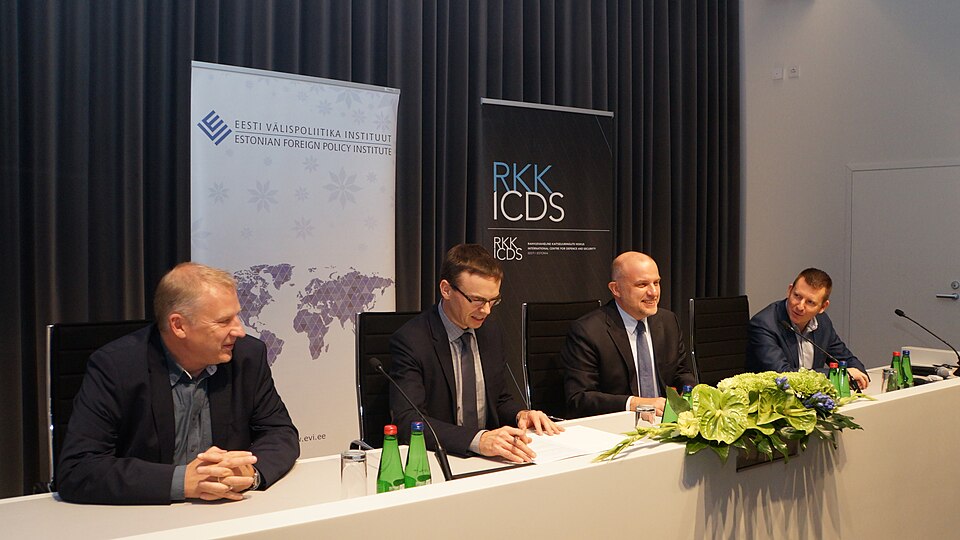
Security expert Rainer Saks writes that Brandon Williams, head of the US National Nuclear Security Administration, considers Russia's President's nuclear threats a major mistake. According to Williams, these threats demonstrate Russian weakness and Putin's lack of confidence in his army's ability to subdue Ukraine.
OpinionRussia's President Vladimir Putin's nuclear threats against Ukraine and other countries have backfired on the Kremlin's own reputation, according to Brandon Williams, head of the US National Nuclear Security Administration. In his view, Putin made a major strategic error by taking this step.
So writes security expert Rainer Saks (Conservative Party), who, drawing on Williams' analysis, points out that the use of nuclear threats is a sign not of strength, but of weakness. If a state is confident in its conventional military capabilities, it does not need to resort to nuclear rhetoric.
Bluff as a sign of weakness
According to Williams' assessment, Russia's emphasis on nuclear threats sends a clear signal: Putin's regime does not trust its army to subdue Ukraine through conventional military means. This means the threats serve as a compensation mechanism, replacing actual military victories with psychological pressure.
Saks stresses that such behaviour reveals the Kremlin's internal uncertainty and should change how Western countries regard Russia's threats. If the nuclear card is played from weakness rather than strength, there is reason to believe we are dealing with a bluff, which taking it seriously might actually bring Russia more success than it deserves.
What does this mean for the West?
According to the security expert, Williams' analysis should give Western countries confidence: support for Ukraine should not be limited by fear of interpreting Russian nuclear rhetoric as genuine escalation. On the contrary, concessions may amplify the threats, while firmness demonstrates that the bluff has been called.
Saks has previously served as head of Estonian foreign intelligence, and his analyses are highly regarded in Estonia. The message from the Conservative Party expert is clear: the West must read Russia's threats in their true context, as an expression of impotence rather than a demonstration of force.
Open in app →