Ramstein pledges $4 billion in military aid to Ukraine amid escalating conflict
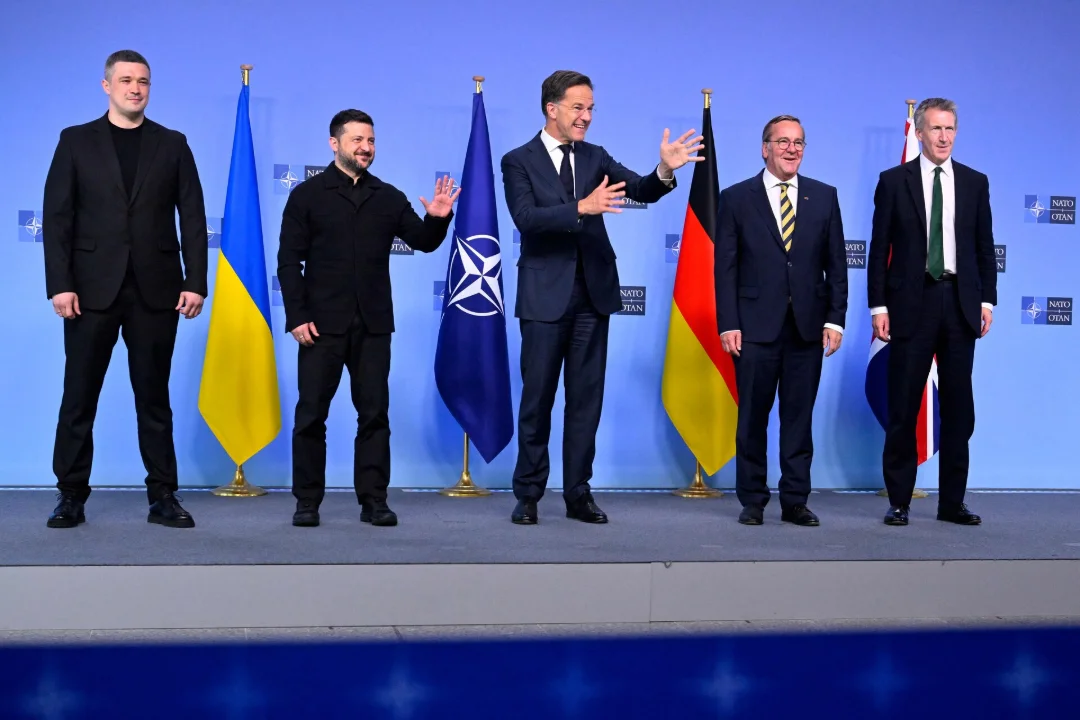
Western allies gathered in Belgium pledged approximately $4 billion in new military assistance to Ukraine at the Ramstein format meeting, with a focus on air defence, drones and artillery. The announcement came as Ukraine launched one of its largest-ever drone strikes on Moscow and EU leaders extended sanctions against Russia for 12 months. Polish authorities also arrested a suspect in the killing of Russian anti-Kremlin activist Robert Kuzovkov.
PoliticsWestern allies at the Ramstein format defence meeting in Belgium on Friday, June 19, 2026, day 1,577 of Russia's full-scale invasion, committed roughly $4 billion in new military support for Ukraine, according to Ukrainian Defence Minister Mykhailo Fedorov.
Air defence takes centre stage
The bulk of the pledged aid targets Ukraine's most urgent battlefield needs: air defence systems, drones, and long-range artillery ammunition. Fedorov announced that nearly $1 billion will be channelled through Ukraine's Priority Requirements List (PURL) to procure interceptor missiles for Patriot air defence systems. Nine nations joined the initiative, with Germany, Norway, the Netherlands and Sweden making the largest contributions.
German Defence Minister Boris Pistorius confirmed that Berlin is fast-tracking $200 million for air defence ammunition and an additional $200 million specifically for PAC-3 interceptor missiles for Patriot systems.
Drones and artillery pledges
Drone procurement accounts for over $1 billion of the total package. In a separate announcement, Britain unveiled a £752 million (approximately $1 billion) military aid package for Ukraine, comprising 150,000 drones to be delivered before the end of 2026, more than 350 air defence missiles, and radar equipment.
The Netherlands pledged an additional €500 million package, half of which, €250 million, is earmarked for developing Ukraine's drone capabilities. Norway committed to funding maritime drones, which Kyiv has used effectively against Russia's Black Sea fleet.
Norway, Denmark, Spain, Lithuania and Luxembourg combined for $540 million to purchase long-range artillery ammunition.
Kyiv sets pre-winter deadline
Ukrainian President Volodymyr Zelenskyy stated that Ukraine's goal is to end the war with Russia before the coming winter through diplomacy and intensified international pressure on Moscow. He said the combination of political, economic and military pressure could create conditions for ending hostilities or at least triggering meaningful negotiations.
Zelenskyy also warned that Ukraine must be ready for the possibility that fighting continues through winter, and listed gas supplies, diesel fuel reserves, energy sector support, and at least 300 additional missiles as top priorities.
Ukraine strikes Moscow, Russia threatens escalation
Zelenskyy confirmed that Ukraine carried out a large-scale drone strike on Moscow this week in direct retaliation for a Russian missile attack on a historic monastery complex in Kyiv. Ukrainian drones hit several targets in the Moscow region, reportedly setting a major oil refinery ablaze and forcing evacuations at a Moscow airport, one of the largest Ukrainian air strikes on the Russian capital since the start of the full-scale war in 2022.
Russian Foreign Minister Sergei Lavrov responded on Thursday by announcing that Moscow would begin conducting regular, massive «group strikes» against Ukrainian military and strategic targets in response to Kyiv's attacks.
Analysts note the strike underscores Ukraine's growing ability to reach critical infrastructure near Moscow, but it also risks triggering even more intense Russian retaliation against Ukrainian cities.
Belarusian border threat mounts
Ukrainian officials report a significant increase in Russian reconnaissance drone flights through Belarusian airspace toward Ukraine in 2026. While no direct evidence of imminent Belarusian military involvement has been made public, Kyiv has accelerated construction of fortifications along its northern border, including anti-tank trenches, concrete «dragon's teeth» and wire obstacles. Ukraine's military cautions that the drone activity may indicate intensified surveillance and possible preparations for future operations, requiring Kyiv to maintain substantial forces along the northern front.
EU extends sanctions, opens back-channel to Moscow
EU member state leaders decided to extend economic sanctions against Russia for 12 months, a significant departure from the previous practice of six-month renewals. The decision signals that Europe is not ready to ease pressure on Moscow despite cautious diplomatic contacts.
EU officials acknowledge taking preliminary steps to open communication lines with Moscow to ensure European involvement in any future peace talks, though these are explicitly not formal peace negotiations.
Latvian Prime Minister Andris Kulbergs was sceptical: «First, there has to be someone on the other side ready for peace. Unfortunately, no one on that side wants peace. There is no point in talking when the other side [Russia] does not want [peace],» he said.
Russian activist killed in Poland
Polish authorities arrested a 36-year-old man travelling on a Georgian passport, suspected of murdering Russian anti-Kremlin activist Robert Kuzovkov in Poland on Monday. Kuzovkov, known for satirical cartoons mocking Vladimir Putin, including one depicting Putin in the arms of Soviet dictator Josef Stalin, was shot in the head, chest and back. Officials are investigating possible ties between the suspect and a foreign intelligence service.
Polish Prime Minister Donald Tusk said the killing appears to be a political murder and that Russia may be behind it. Polish authorities note that Kuzovkov had previously been offered state protection but declined it. The investigation is ongoing, with no public evidence yet directly linking the killing to the Kremlin.
Open in app →