Russian-born lawyer defending Nord Stream suspect opens up on Ukraine, Zelensky and war
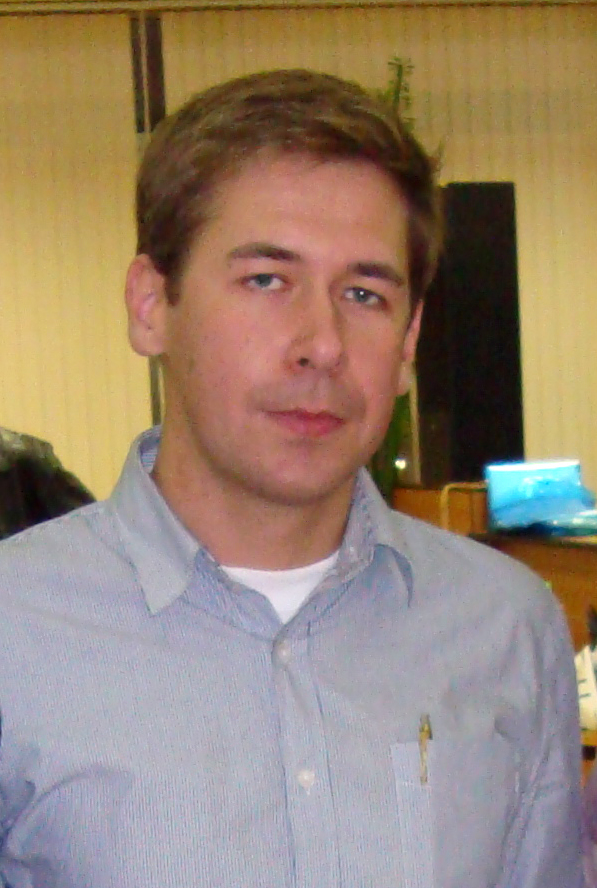
Ilya Novikov, a Russian-born lawyer who relocated to Ukraine in 2019 and now faces criminal sentences in absentia in Russia, is defending Serhii Kuznetsov, the Ukrainian citizen detained in Italy and extradited to Hamburg in connection with the Nord Stream pipeline bombings. In a wide-ranging interview, Novikov discusses the state of the case, his sharp criticisms of President Zelensky, and his view that the war with Russia is an existential all-or-nothing struggle for Ukraine's survival.
PoliticsIlya Novikov is not an easy man to place. Born in Russia, now a Ukrainian citizen and practising attorney, he has been sentenced in absentia in Russia to eight and a half years in prison for spreading so-called "fake news," labelled a "foreign agent," added to Moscow's registry of "terrorists and extremists," and placed on a separate wanted list on treason charges for fighting on Ukraine's side. Yet from his base in Kyiv, he represents one of the most politically charged defendants in Europe: Serhii Kuznetsov, the Ukrainian accused of helping blow up the Nord Stream gas pipelines in the Baltic Sea.
The Nord Stream Case in Hamburg
Kuznetsov was arrested in August 2025 while on holiday with his family in Italy and extradited to Germany, arriving in Hamburg on November 27, 2025. He is held in a pretrial detention facility typically reserved for terrorism suspects, a placement Novikov disputes, noting there is no terrorism charge against his client. Kuznetsov's initial six-month detention term expired in May 2026, and a German federal court is expected to extend it.
The Nord Stream 1 and Nord Stream 2 pipelines were destroyed overnight on September 26, 2022. According to reporting by The Wall Street Journal, the operation was conceived in May 2022 by a group of Ukrainian officers. The same outlet has reported that German investigators believe the bombing was directed by Valery Zaluzhny, then commander in chief of Ukraine's Armed Forces. Novikov says the German federal court's ruling from December 10, 2025, which denied an appeal against Kuznetsov's detention, states that he was an officer in a special-operations unit and that «the act of sabotage was presumably initiated and directed by Ukrainian state authorities,» though Zaluzhny is not named in that document.
Kuznetsov's courtroom strategy, Novikov explains, is deliberate silence rather than denial. «Stay quiet and suddenly they're stuck doing all the work,» Novikov said, contrasting that posture with putting forward a specific narrative that prosecutors can then dismantle. A formal indictment is expected within weeks, possibly before the end of June 2026.
Novikov frames the case in broader political terms, arguing that a conviction would hand ammunition to Russia's sympathisers in Germany, particularly the AfD, who use the affair to rehabilitate Nord Stream as a project that delivered cheap Russian gas. He believes the German chancellor has the legal right, and arguably the political reason, to conclude that continuing the prosecution runs counter to Germany's national interests. As for the pipeline itself: «Was it a crime to build and operate Nord Stream? My answer: yes, it was.»
Zelensky, Poroshenko, and Ukraine's Political Freeze
Novikov also handles several cases for former Ukrainian President Petro Poroshenko, and he makes no secret of his dim view of Volodymyr Zelensky. On February 12, 2025, Zelensky imposed open-ended sanctions on Poroshenko, a move Novikov says was designed to block his client from registering as a candidate in any future election, since the sanctions bar him from opening the dedicated campaign bank account Ukrainian law requires.
The European Parliament and the Council of Europe's Commissioner for Human Rights have both flagged that sanctions in Ukraine have become instruments of political pressure on the opposition, Novikov notes. A legal challenge to the sanctions decree was filed three weeks after it was published and remains pending before a Kyiv court, with the next hearing scheduled for June 25, 2026.
Novikov also describes a separate battle over Poroshenko's right to travel abroad as a member of the Verkhovna Rada. After a court found the travel ban on deputies unlawful in November 2025, the government filed a cassation appeal to the Supreme Court four days later, freezing the ruling. No hearing has been held since. «Formally, Zelensky himself has nothing to do with it, formally, these are decisions made by the government and the Verkhovna Rada. But given the makeup of the government and the Rada, it's clear that these are the president's people and the president's decisions,» Novikov said.
Elections, the Telethon, and Zelensky's Calculus
On the question of elections, Novikov argues that Zelensky faces a structural trap: no previous Ukrainian president has held a single-party parliamentary majority, and losing it would expose Zelensky to criminal prosecution once his immunity as head of state ends. Ukraine's wartime telethon, launched by presidential decree in March 2022, functions in Novikov's view as a permanent campaign advertisement rather than a genuine wartime information service.
He says he has twice observed what felt like genuine preparation for imminent elections, once in February 2025, when a Trump-brokered ceasefire seemed close, and again in January 2026, but both proved false alarms. «The next election, whenever it happens, is going to be one big khaki parade. The frontmen for every party will be soldiers,» he predicts.
War Without Compromise
On the wider conflict, Novikov is unsparing. He dismisses the idea that a negotiated compromise with Vladimir Putin is achievable in any meaningful sense. «It's not about whether Zelensky wants to make peace or not. It's not that Trump isn't trying hard enough. It's that Putin still believes he can keep trying to break us,» he said. He describes the fighting around Mala Tokmachka not as a battle for a few square kilometres but as a proxy contest over whether Russia ultimately takes Kyiv and Odesa.
A nominal ceasefire followed by the gradual disarmament of Ukraine, he warns, would mean «total annihilation», because Putin would not reciprocally disarm and Ukraine would not survive a second round of full-scale war. «The people who think a compromise is possible under those conditions simply don't understand the world we live in,» Novikov said.
As for his own position: wanted in Russia, a Ukrainian citizen since 2024, and deeply embedded in Kyiv's most politically sensitive legal battles, Novikov is philosophical. He served briefly in Ukraine's Territorial Defense in the early weeks of the 2022 invasion, mostly driving supplies near Bucha. He does not rule out a future visit to Moscow one day, but not to live there. «Walking around knowing that I'm surrounded by people like that, among others, would be unpleasant for me,» he said of the city's pro-war population. The recurring spy-thriller dreams about escaping Moscow, he adds, have finally stopped.
Open in app →