Russian-born lawyer in Kyiv defends Poroshenko and blasts Zelensky's political tactics
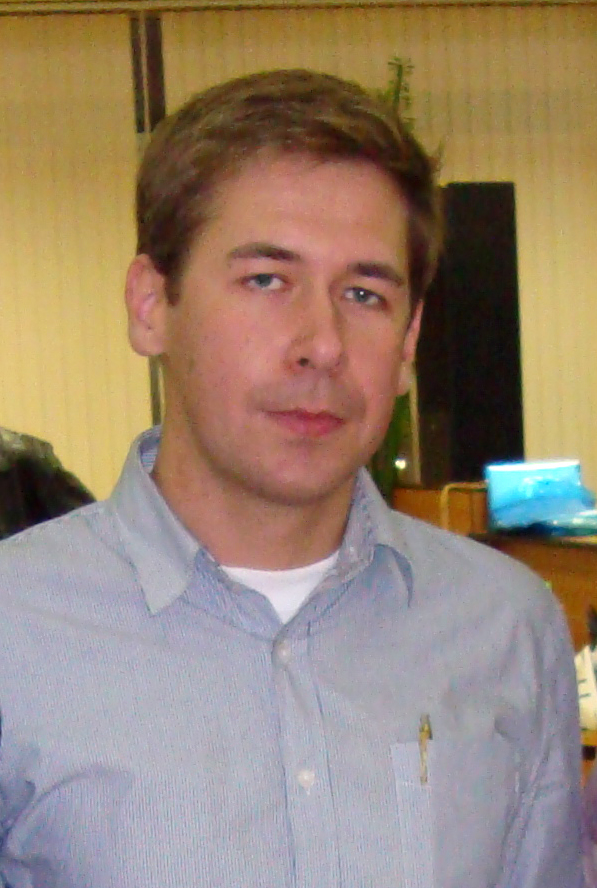
Ilya Novikov, a former Russian human rights lawyer now practicing in Ukraine, has spoken candidly about defending ex-President Petro Poroshenko, his role in the Nord Stream sabotage case, and his sharp criticism of President Volodymyr Zelensky's handling of political opponents. Convicted in absentia in Russia and listed as a terrorist there, Novikov became a Ukrainian citizen in 2024 and openly calls himself a "porokhobot", a Poroshenko supporter. He argues that Zelensky's sanctions against Poroshenko are designed to prevent him from running in future elections.
PoliticsIlya Novikov is not an ordinary lawyer. Born in Moscow, he once defended Alexei Navalny's Anti-Corruption Foundation (FBK) and participants in street protests in Russia. Now living in Kyiv, he holds Ukrainian citizenship, which required formally renouncing his Russian passport, is convicted in absentia in Russia to eight and a half years in prison for spreading "fakes," declared a foreign agent, placed on Russia's terrorist and extremist list, and is wanted on a separate treason charge for fighting on Ukraine's side. In a lengthy interview with Meduza, Novikov spoke about the Nord Stream case, Poroshenko's legal battles, and his unsparing view of the Zelensky administration.
Life under missile fire in Kyiv
Novikov paints a picture of grim normalcy in the Ukrainian capital. «Most Kyiv residents have developed an unhealthy fatalism,» he told Meduza. Shahed drones fly through the night to exhaust Ukraine's air defences, followed by missile strikes typically arriving between five and six in the morning. «Everyone already knows what they'll do, whether to stop work or not. You simply can't work if you go to a shelter every single time.»
On the broader question of whether peace negotiations with Vladimir Putin are realistic, Novikov is blunt: «A ceasefire, when Putin is ready for it, may or may not be formalised through negotiations. But there is no possibility of reaching a compromise that would then be observed.» He argues that the war is not about a few square kilometres near Mala Tokmachka, it is about whether Kyiv and Odesa remain Ukrainian, and ultimately about Ukraine's survival as a state.
The Nord Stream case
One of Novikov's most prominent current cases involves Serhiy Kuznietsov, a Ukrainian citizen arrested in Italy in August 2025 while on a family holiday and extradited to Germany, where he is held in Hamburg in a high-security wing alongside terrorism suspects. Kuznietsov is the first person detained in connection with the September 2022 explosions that destroyed the Nord Stream 1 and Nord Stream 2 pipelines in the Baltic Sea.
Novikov joined the international defence team in December 2025, after Kuznietsov arrived in Germany. He notes that the German Federal Supreme Court's December 2025 ruling, which denied a bail challenge, describes Kuznietsov as an officer of a Ukrainian special forces unit and states that «the act of sabotage was allegedly initiated and managed by state bodies of Ukraine.» Former Ukrainian commander-in-chief Valery Zaluzhny is not named in the document, though German media have reported investigators consider him a key figure.
Kuznietsov's legal strategy is deliberate silence. «His position is not denial, it's silence. Those are different things,» Novikov explains. «If there is a presumption of innocence, one of the most inconvenient positions for the prosecution is to remain silent. Let them prove everything they want.»
An indictment is expected before the end of June 2026. Novikov's stated goal is full acquittal, or, if the case proceeds, an outright acquittal at trial. He also makes a pointed political argument: «If a court convicts and says the pipeline bombing was a crime, that somehow removes the question of whether building and using Nord Stream was a crime. My answer: yes, it was.»
Defending Poroshenko against Zelensky
Novikov has represented former Ukrainian President Petro Poroshenko across multiple cases, more than a hundred separate criminal proceedings were opened against the former head of state at various points, though Novikov notes many were frivolous. The phrase "porokhobot", a Ukrainian term for a Poroshenko loyalist, is one he embraces without embarrassment. «When people call me a porokhobot, that's not an exaggeration. I really am one.»
The central current dispute concerns sanctions that President Volodymyr Zelensky imposed on Poroshenko on 12 February 2025. Novikov argues the measures were timed to coincide with expectations of an imminent ceasefire brokered by Donald Trump, which would have allowed elections to take place. When no ceasefire materialised, the sanctions remained, permanently blocking Poroshenko from opening a campaign bank account and effectively barring him from any future electoral contest.
«Sanctions in Ukraine have become an instrument of political pressure on the opposition,» Novikov says, pointing to criticism from the European Parliament and the EU's human rights commissioner. A legal challenge was filed three weeks after the decree, and the case is ongoing.
A broader critique of Zelensky
Novikov's criticism extends well beyond Poroshenko's personal situation. He argues that Zelensky currently holds a uniquely concentrated grip on power, a parliamentary supermajority that no previous Ukrainian president, including Viktor Yanukovych, ever possessed. Losing that majority, Novikov contends, would expose Zelensky to serious criminal investigations that he is currently shielded from.
«Losing control of parliament means that with high probability Zelensky personally faces criminal prosecution,» Novikov says. «He cannot simply abandon his parliamentary majority. Any parliamentary election would cost him that majority.»
He also takes aim at Ukraine's "telemarathon", the unified wartime broadcast that replaced independent television, calling it «a gigantic pre-election advertisement» for Zelensky, comparable to what was done to the independent Russian channel Dozhd.
On the question of whether he fears criticising a wartime president: «It is rather late for me to choose personal safety and comfort over the ability to say what I think. I did not hesitate to say far harsher things about Putin while I was still living in Russia. It would be strange to fear Zelensky.»
Novikov served briefly in Kyiv's territorial defence forces in the early weeks of the full-scale invasion in 2022, working mainly as a driver, transporting food and ammunition near the city's ring road. He has no plans to enter Ukrainian politics himself, describing the prospect of running for office as «insane» and preferring to remain a practising lawyer.
Open in app →