Science: one childhood-banned habit protects bones after age 40
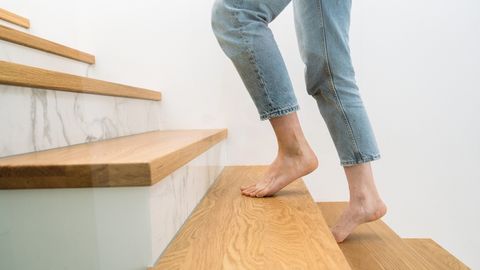
Research shows that bone density begins to decline between ages 30 and 40. Women after menopause are particularly vulnerable, potentially losing up to 20 percent of bone density within the first five to seven years. One in three women over 50 experiences a fracture due to osteoporosis.
CultureBone health is a topic we discuss too little, until it's too late. Scientific studies confirm that bone density begins to decline imperceptibly between the ages of 30 and 40, when most people are not yet concerned about their bones.
For women, menopause brings particularly dramatic changes. The drop in hormones, especially estrogen, accelerates bone tissue loss sharply: in the first five to seven years after menopause, a woman can lose up to 20 percent of her bone density. The statistics speak clearly: one in three women over 50 experiences a fracture caused by osteoporosis in her lifetime.
What was banned in childhood?
Many of us remember how parents forbade jumping off furniture, running on stone pavements, or other "dangerous" play. In reality, it is precisely these high-impact activities-jumping, running, dancing-that are extremely beneficial from a bone density perspective. Bone is living tissue that responds to stress by becoming stronger.
After age 40, it would be worthwhile to deliberately reintroduce these activities. Research shows that impact training, such as jump rope, trail running, step aerobics, or even simply regular walking on hard ground, stimulates bone cells to form new bone tissue. In addition, calcium and vitamin D play an important role, and their intake should be monitored as we age.
Prevention pays off
Osteoporosis is often a so-called silent disease, with no symptoms until a fracture has already occurred. That is why prevention is more important than treatment. Doctors recommend starting regular weight-bearing exercise as early as possible, but emphasize that even starting later yields results. To check bone density, there is a simple test, densitometry, which is recommended for women starting at age 50.
Open in app →