Scientists discover: oat plant can call bees to defend against predators
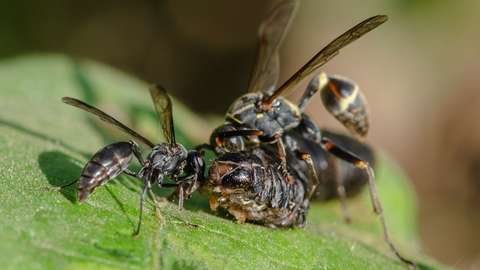
Scientists have uncovered how the oat plant triggers a complex biological mechanism when attacked by predators, which summons bees to its aid. The process begins with details invisible to the naked eye. This discovery changes our understanding of plant defence mechanisms.
TechnologyThe seemingly defenceless oat plant harbours a surprisingly intricate biological system that activates the moment hungry predators begin to attack. Scientists have now painstakingly mapped out exactly how this process is triggered and what signals lie behind it.
A fine chain of signals
When predators begin eating the oat plant's leaves, a chain of chemical signals is activated within the plant. As a result, the plant emits volatile compounds that act as a kind of call – luring bees, which are natural enemies of predators. The process is so precise that the plant can distinguish damage caused by different insects.
According to scientists, the key to the entire mechanism lies in details too small to spot with the naked eye. Changes occur at the cellular level in the plant's tissues, ultimately resulting in the release of volatile substances. These substances carry information about the threat, and when bees detect these signals, they respond quickly.
Shifting the balance of power
Such a defence strategy completely transforms the situation's balance of power. What appears to be an easy meal for a predator turns out to be a trap – the plant summons its defenders before the damage becomes too severe. The scientists' discovery opens new possibilities for understanding the intricate web of co-evolutionary relationships between plants and insects.
This research also offers practical prospects for agriculture. If scientists can precisely determine which chemical signals are involved in repelling predators, it may in future be possible to breed plant varieties that are even more resistant to natural pests – without relying on synthetic pesticides.
Open in app →