Scientists now understand how the Amazon molly clones itself
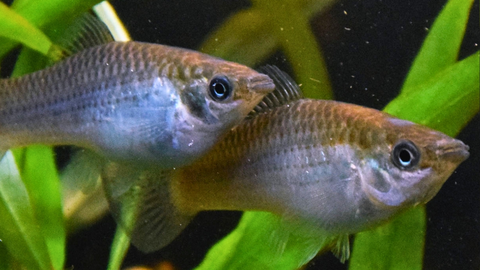
The Amazon molly is an extraordinary species whose populations consist almost exclusively of females and which can reproduce through cloning. Scientists have now uncovered how this species manages to survive successfully despite lacking genetic diversity. According to theory, such a strategy should be risky in the long term, but reality tells a different story.
TechnologyMost animal species require two parents to produce offspring, but nature also offers remarkable exceptions. One of these is the Amazon molly (Poecilia formosa), whose populations consist almost exclusively of females, making males essentially superfluous to them.
The cloning paradox
For biologists, this species has long been a mystery. Asexual reproduction, or producing offspring through cloning, means that genetic diversity remains extremely limited. According to evolutionary theory, such a population should be particularly vulnerable to disease, parasites, and changing environmental conditions-the so-called Muller's ratchet should lead to genetic depletion and eventually extinction.
Yet the Amazon molly has persisted successfully for a very long time, having evolved as a hybrid species resulting from the mating of two other fish species.
How do they do it?
New research has shed light on the mechanisms that allow the molly to avoid the cloning trap. Scientists have found that although the fish reproduces predominantly asexually, genetic variation occasionally occurs-for instance, through mutations and rare hybridization events, where females use sperm from males of other fish species to fertilize their eggs without actually transferring their genetic material to the offspring.
This so-called gynogenesis, or female-centred reproduction, allows the species to maintain stability while preserving a degree of genetic flexibility. In addition, the species has been found to have elevated mutation and DNA repair activity, which helps increase diversity.
An evolutionary lesson
The Amazon molly example demonstrates that asexual reproduction does not necessarily mean evolutionary a dead end. For scientists, this species is a valuable model for studying genetics, evolution, and reproductive biology, and proof that nature often finds surprising solutions to problems that science has deemed insurmountable.
Open in app →