Scottish model shows Estonia's greenhouse gas emissions one-third higher
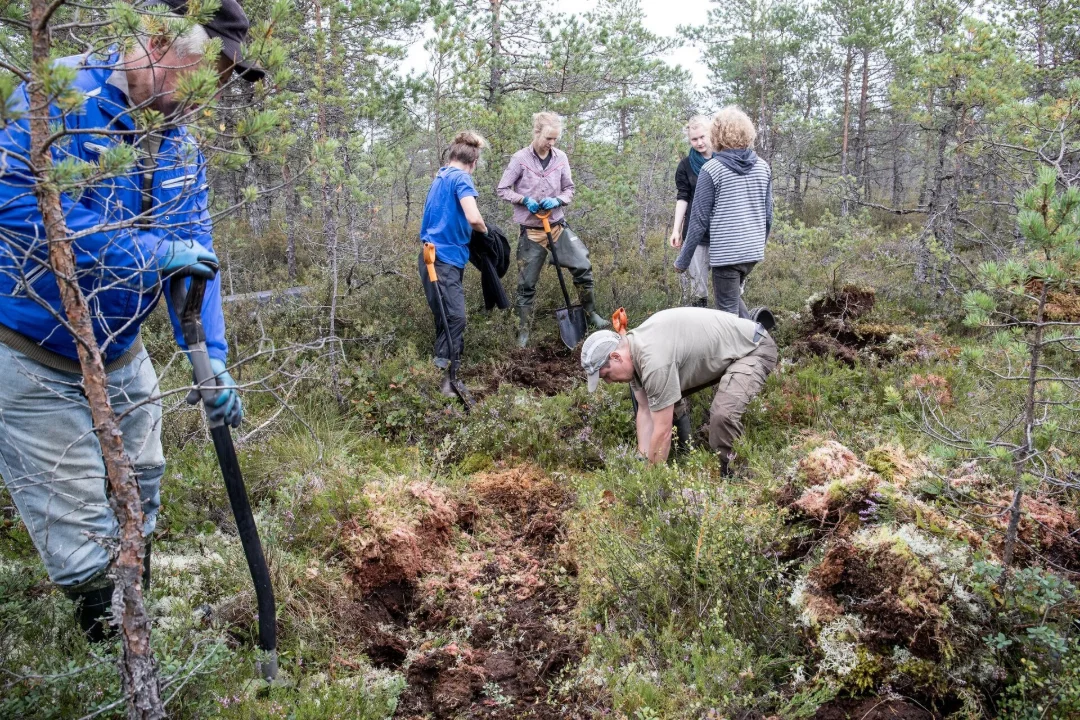
Estonia is testing a Scottish model for calculating greenhouse gas emissions from forest soil, which produces significantly higher results than previously reported figures. According to Allan Sims, associate professor at Estonian University of Life Sciences, these are preliminary results and the final report should show emissions similar to those Estonia has reported so far. The main additional emissions come solely from peatland restoration.
EstoniaEstonia has long struggled with adequate measurement of greenhouse gas emissions from forest soil, and has used data from other natural conditions as a temporary solution. Testing is now underway with the Scottish model, whose preliminary results indicate that Estonia's actual emissions are millions of tonnes higher than the country has previously reported officially.
Preliminary results alarming
Once a year, Estonia submits its greenhouse gas inventory to both the European Commission and the UN Framework Convention on Climate Change secretariat. Regarding forest land, mineral soil carbon dioxide (CO₂) emissions are reported, and for drained peatland soils, methane (CH₄) and nitrous oxide (N₂O) emissions are also reported.
The preliminary figures obtained from applying the Scottish model suggest that Estonia's actual greenhouse gas emissions could be approximately one-third higher than the country has officially reported to date. This would raise an important question about Estonia's fulfilment of climate commitments.
Final result changes little
However, Allan Sims, associate professor of forest and land management and forest industry at Estonian University of Life Sciences and the primary author of the calculations, emphasises that these results should not be cause for concern. "The client wanted to see that we were doing the work," explained Sims, referring to the fact that the final report will keep emissions in the same order of magnitude as what Estonia has reported so far.
According to Sims, the only substantive change is related to peatland restoration-that is where a small additional emission originates, which will still be factored into the final results.
Why this matters
The previous temporary solution, where Estonia used data from other countries to estimate its soil emissions, did not accurately reflect local natural conditions. The distinctive nature of Estonia's forests and peatlands requires an adapted methodology, which is why testing this new model is an important step towards more accurate data, even if the final result does not change significantly.
Open in app →