Should Narva's local government be dissolved? Lessons from Italy and Latvia
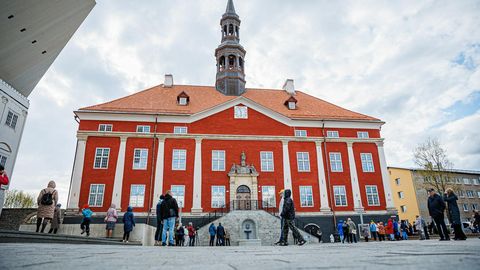
In an opinion article, Martin Aadamsoo asks whether it is time for Narva to follow Italy's path – dissolving a local government permeated by corruption, restoring order to the city, and returning power to residents only after criminal ties have been investigated. He draws parallels with the experiences of Italy and Latvia.
OpinionNarva's local government is once again under scrutiny, and Martin Aadamsoo poses a sharp question: is the time ripe for radical change? The author points to Italian practice, where the state has dissolved local governments fallen under mafia influence, imposed state administration, and restored legitimate governance only after criminal networks have been sufficiently rooted out.
Italy and Latvia as examples
Italy's experience shows that rescue from organised crime influence often requires decisive state-level intervention. Latvia has likewise taken similar steps, removing a corruption-infected local government from authority and replacing it with state-appointed administration. The examples of both countries illustrate that democratic states need not tolerate a situation where local government operates in the interests of criminal networks.
Narva's problem in Estonia's context
Narva is Estonia's third-largest city, where the credibility of local government has been questionable for years. In Aadamsoo's view, such a situation cannot be postponed indefinitely – if corruption is systematically entrenched, mere replacement of individual officials will not suffice. The article argues that in the longer term, it would serve Narva residents well if the state intervened decisively and created conditions for honest local governance.
The author emphasises that the goal is not to strip Narvans of power forever, but to create conditions under which local democracy can function purely – without the criminal networks that currently obstruct it.
Open in app →